Showing posts with label Obama. Show all posts

Saturday, April 13, 2013

Wondrous weather and world affairs

I spent most of this week at CU’s 65th annual Conference on World Affairs (a.k.a., CWA), which I also wrote about last year. Over 200 talks and panels by over 100 experts from a variety of fields, with topics ranging from "Perpetual War" to "My Most Disturbing Thought," from "Hamlet" to "The Evolution and Devolution of TV," from "Break out the Cheetos! Pot's Legal" to "Confessions of a Bibliophile." With overlapping sessions, its often hard to decide where to go when, for instance, "Why Lincoln, Why Now?" conflicts with "My Life as a Spy and My Betrayal by the White House" (Valerie Plame Wilson). All free and open to the public.

To add to the excitement, we also had a snowstorm of record proportions. The week provided a classic example of spring storms in Colorado: a gorgeous, sunny spring day on Monday, 14" of snow by Wednesday morning, blue skies and green grass by Friday. Have I mentioned that I love Colorado weather?

[So, I just realized that this got pretty long. It’s just that there’s so much to say about the Conference on World Affairs and so many pictures to share of the weather!  If it seems like too much, you can just go for the pictures and consider those the visual Cliff Notes.]

Folks come to CWA from the Boulder area and beyond to hang out on campus for a week, just learning. There are scores of grey-haired folks toting their knapsacks loaded with jackets, lunch, and water. They ride the bus or park off campus and walk, carrying everything they’ll need for the day. They sit in clutches in the student center in the morning, poring over the day’s schedule, planning what sessions they’ll attend. They eat their lunch during sessions or in the hallways between—and so do the presenters. Students come, too, sometimes singly out of sheer interest in a topic and sometimes in groups as a class assignment. And there I was, in the midst of it all.

I couldn't seem to constrain my lifelong habit of taking notes during these talks. So, although I could go on and on about most any of the 20 or so sessions I attended, I won't. Instead, here’s my log for the week along with some highlights, to tempt you to join me next year—all wrapped in photos of the week’s wonderful, wacky, changeable Colorado weather.

Monday

Opening day of the conference. I arrived for the first talk, walking past this new pedestrian underpass with its strikingly appropriate underground artwork. I love it.


Then I spotted this sidewalk chalk notice alerting (warning?) the campus community that thousands of spare folks would be cluttering the sidewalks, the student center, and assorted venues around campus for the week.


En route to the opening plenary, I joined the crowd along a walkway lined with flags of the world—the iconic image of CWA, shown every year on the cover of the program. Sunny, warm. Students were running around in shorts.


Over the course on Monday, I went to the following sessions. I’ll give very quick crib notes on particular favorites, but if you want to know more about any of these, I have notes. Call me. How about lunch, if you're in the neighborhood? Or email and I'll send a copy of my scribblings. This offer holds for all days. 

Immigration: My Land or Our Land? Ours. It has to be ours.

Who Stole the American Dream?  The growing income gap (we have a “geyser up” rather than a trickle down” economy) has shrunk the middle class and virtually destroyed the “dream” that went with it. Who stole that dream? The “Powell memo” of the early 1970s, which set business on a path toward greater domination of the political process.

Why Universities Won't Teach Virtue. 

Bipartisanship, Civility, and Dialogue. We need to talk to each other.

“One Flew Over the Cuckoo’s Nest” (the movie): I saw this movie decades ago, and it was to be carefully dissected during the week, so I went to see it anew on Monday. Each day for the rest of the week, they show the same movie again, and any audience member can shout “stop” at any point to make a comment or ask a question. The idea is to run through the whole movie in this detailed way by the end of the week. This part, called “Interruptus,” would begin on Tuesday. This is a model created by Roger Ebert, the noted film critic, who died last week. He came to CWA every year for over 40 years, and he provided what has become the conference's tag line, describing CWA as “The conference on everything conceivable.

Tuesday, snowy Tuesday

The snow started Monday night, and things on campus were sloppy and dreary Tuesday. But loving weather, I actually enjoyed it. The community folks showed up despite the slimy weather, still with knapsacks, but now in winter wear. The flags were beautiful even as the snow kept falling.


My Tuesday sessions:

Belief. Wonderful discussion ranging from “Do I really believe what I appear to believe judging from my practices?” to “If you doubt all the things you believe about who you are, maybe you'll find who you are.

 Earth from Space: Altering Our Views. Maybe seeing earth from space (the “blue marble”) doesn’t just make us realize that we are all one family, that borders are totally imaginary (the idealistic view). More to the point, it shows us how dreadfully isolated we are, how responsible for this tiny speck in space, and how morally compromised we are as we continue to live as if we weren't responsible.

Junk Science Policy

Sino Spring: Social Media in China

“One Flew Over the Cuckoo’s Nest” (Interruptus). I was curious about this process—besides, it’s a shrink movie! So I skipped out on my “American West” class to check out interruptus. Maybe not a good choice for an impatient person with little movie savvy. I found the (very) frequent interruptions more than a little distracting. And as it turned out, most of the comments weren’t about story content but about technicalities (framing, lighting, etc.) and film-buff curiosities (others who were considered for this part, how the protagonist is paired with signs of nature, etc.). Great for real movie freaks. Not so fun for me. So I considered my interruptus experience complete after Tuesday.

Wednesday

It snowed through Tuesday night, and by Wednesday morning, we had a record snowfall for this date. The scene was magnificent. The flatirons were gorgeous, dusted like powdered sugar with snowIt was a bit sloppy and sometimes slick walking on campus, and some older folks came with their walking sticks for safety. But come they did—the sessions were packed all day. Sunshine, blue skies, and fresh snow made for a gorgeous morning.


I went to a few sessions before heading home at midday to do obligatory life-maintenance chores.

The Geopolitics of Energy

My Most Disturbing Thought. This remarkable discussion began with witticisms (realization that 80% of my pillow is skin and mites; fear of Muppets), moved to politics (faulty assumptions about geopolitics; inability of people to empathize with others they don’t know), and then dwelt at length on the fear of dying. A woman with recurrent cancer is disturbed by the thought “I’m not ready. It may all end, and soon.” And a man who worked on Robert Kennedy’s campaign and was there when Kennedy died reported that his most disturbing thought is that loss is inevitable and unpredictable. Time, he said, is all we have. Spend it well, be present in your life, because time will pass.

What the Frack! Bottom line: we have moved too far, too fast without knowing what we’re doing. The discussion that should have happened before fracking was allowed to begin is only now starting. The industry has already become entrenched and refuses to be forthcoming in providing the information that we need to assess the risks to water and air quality, and the risk of triggering earthquakes. Unfortunately, fracking is exempt from clean air and clean water laws, a concession to the oil and gas industry many years ago. Gee, I wonder how that happened ...


When I left around noon, the sidewalks were clear (OK, wet and sloppy, but not icy), the snow was settling, and spring was in the air. 


Thursday

By Thursday morning, the snow that had seemed a nuisance—if a beautiful one—on Wednesday had been shaped into a playful "receiving line" of snow people, welcoming CWA participants to the flag walk.


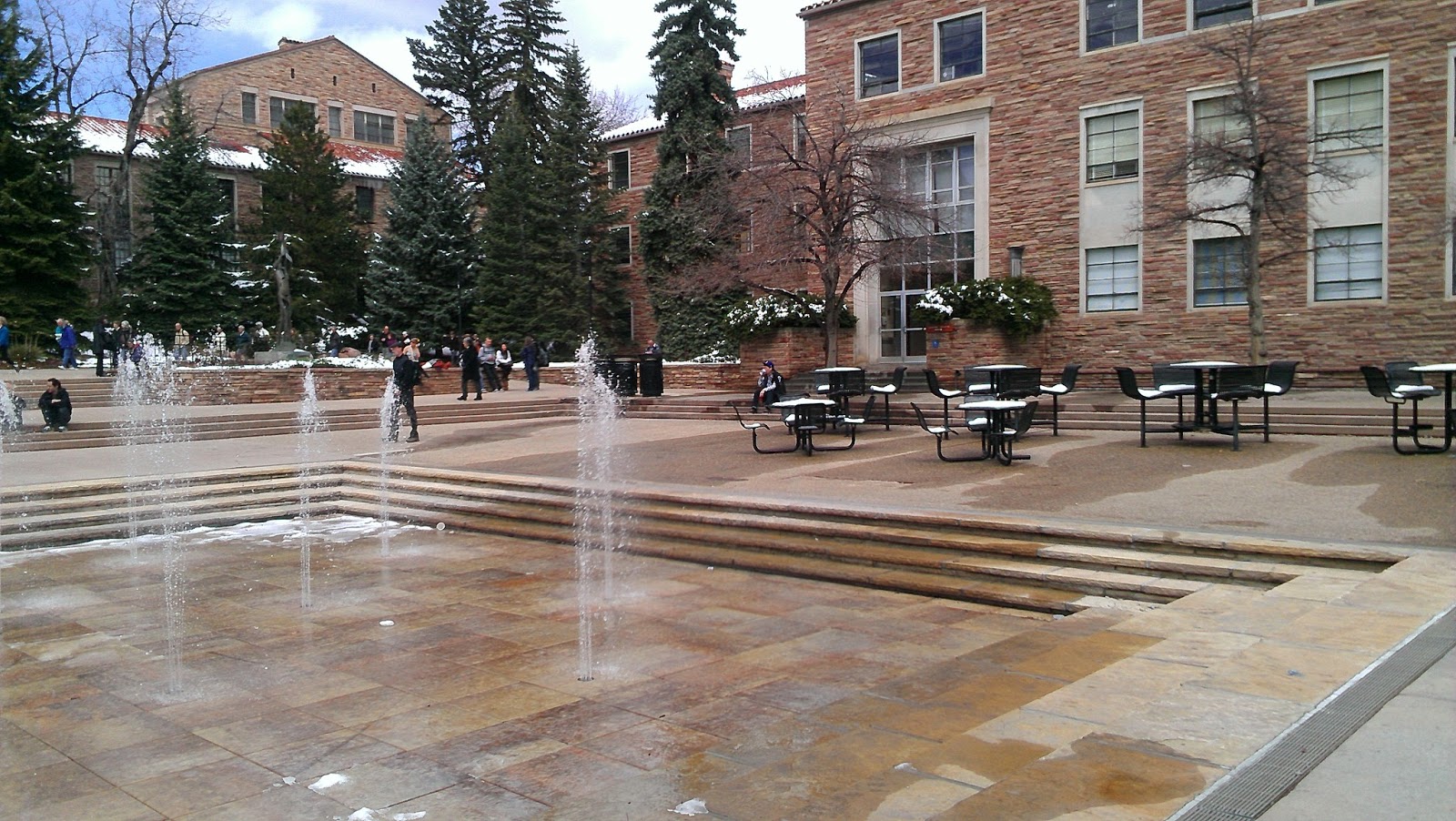
The mountains had lost most of their snow to the Colorado sun. The fountain was running again, and Wednesday’s buried tables and chairs would be used by students at lunchtime.


On Thursday, I went to ...

Obama's Foreign Policy: Audacity or Hope. He has no actual policy, because most attention has been devoted to domestic issues. His report card in this domain was decidedly varied.

 Nuclear Nightmares. It’s worse than we think, Obama knows it’s important, and we need to goad him to action.

 Security and Resilience in a Black Scan World. The “black swan” refers to the unpredictable events that we are not prepared to confront but that can change everything. So titled because we believe that swans are white … until a black swan appears. The possible black swans include things like the transition from fossil fuels to alternative energy sources, the increasing income gap, unseen implications of foreign policy choices (e.g., drone attacks), the possibility of nuclear micro-attacks (dirty bombs) or “rogue nations” with nuclear capability. And, especially, the precise speed and precise consequences of climate change.

And then, to escape from this environmental mayhem, I went to my “American West” class, which I had missed on Tuesday. We talked about water use and water scarcity. So much for that escape thing.

Friday

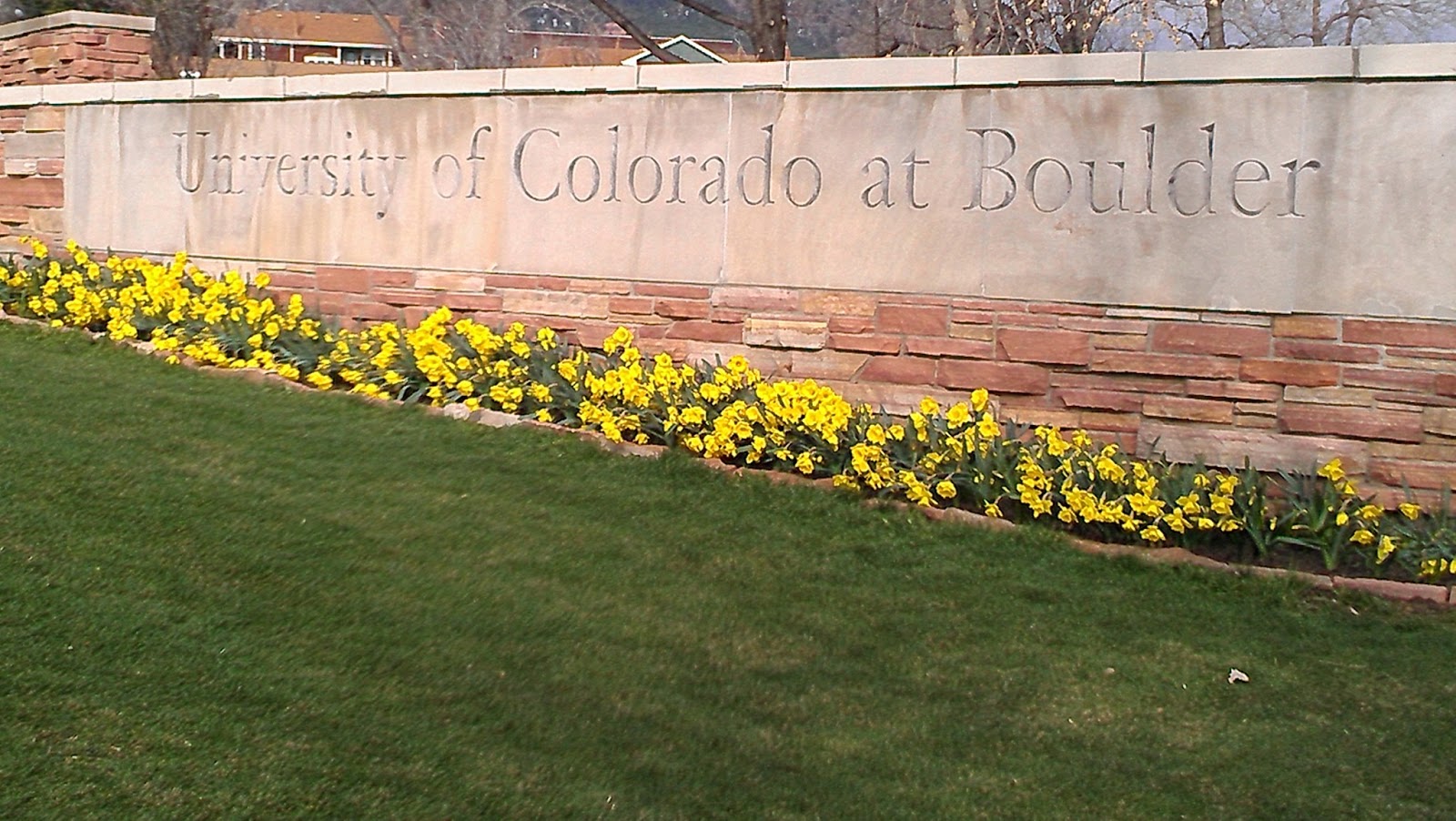
On Friday, I nearly didn't go to the conference. I was tired, and I felt a bit saturated with it all. But then I checked the schedule and decided to go to at least a couple of sessions. As I walked onto the campus, I was welcomed by the total turnaround that is the hallmark of Colorado's weather: the record snow was virtually gone, the grass was greened by the moisture, and daffodils greeted me at the entrance to the campus.


Beside the flag walk, the line of snow people had gathered in a cluster to bid the conference participants farewell. On the lawn, CU students played Frisbee and soaked up the springtime sunshine. 


I finished a great week with these sessions:

Supreme Court: Tyranny of the Third Branch. Bush v. Gore, Citizens United, and “activist judges," oh my!

 Droning On and On. Total agreement across panel members, including an army colonel, that the current use of drones is illegal, immoral, and maybe unconstitutional. They cited issues like national sovereignty, civilian deaths, and the dehumanization of both targets and drone operators. One panelist, who described himself as a supporter of Obama in general, said outright that Obama’s actions in this regard are impeachable. No one—on the panel or in the audience—took exception to his assertion.

 Molly Ivins Freedom Fightin' Memorial Plenary:  This talk is named after Molly Ivins, a brilliant, witty, irreverent, and incisive journalist from Texas, who, prior to her death, was a long-time, frequent participant in CWA. This year, the Molly Ivins plenary, Truth in Journalism in the Digital Age,” was given by David Corn, the Washington Bureau Chief for Mother Jones. He's the guy who broke the 47% story that may have derailed Romney’s hopes for the presidency. Great set-up, mediocre talk about the impact of digital media on what we take as “the news.”


As I left the plenary, I snapped one more photo of the flag walkway. The weather had done a 180 since Wednesday, back to the sunny skies and green grass of Monday. Hard to believe we had over a foot of snow just two days before.


Heading off campus, I spotted a new sidewalk sign near where Monday's notice announced the impending arrival of CWA. Time keeps on moving. CWA is so over ... International Fest is coming!


I missed hearing about so many interesting topics. Heck, I only went to 19 out of 200 talks! But I can’t imagine sitting through many more sessions. My brain is on overload as it is.

Maybe I should lobby for shorter days, spread over two weeks. Think of the weather tales I could tell then!


Monday, November 12, 2012

Music for a Sweet Land


OK, enough of the second-guessing, the recriminations, and the self-adulation. Enough of the analyses and the pundits, enough of the advice from every splinter of every constituency of every party. That’s not to say that there’s no wound-licking left to do, no crowing, no slicing and dicing. But in a broad sense, it seems like time to move forward. Time to apply the lessons of the campaign and election, mapping and morphing them into useful directions. It's time, as Hebrew scripture advises, to beat the swords into plowshares. And what better way to do that, I say, than with music.

And, lo and behold, with exquisite timing born of sheer luck (on my part) and wisdom (on the part of others), I get to hear two concerts this week that are destined to provide hours of healing, inspiring, motivating music. The first is a performance on Wednesday by Jackson Browne, who, in addition to making beautiful music, is also known as a human rights and environmental activist. My personal all-time favorite is “The Rebel Jesus.” I don’t expect him to perform it this time, given that it’s really a Christmas song. But it’s relevant no matter what the season, so I can always hope.

And then, on Saturday, a concert that anyone within travelling distance of Boulder really, seriously wants to attend. Sweet Land—Choices of Dignity is a free, everyone-invited performance “inspired by the challenges of the presidential election and reflecting on our lives, our history, and our shared future.” It’s sponsored by Resonance Women’s Chorus of Boulder and Sound Circle, a women’s a cappella ensemble (both of which I’ve written about before and both of which are directed by Sue Coffee) and by One Action, One Boulder, a year-long program to encourage conversations and action around issues of race, class, and inclusion. In addition to performances by these two choruses, the event will feature local musicians, spoken word, the 1000 Voices Project, and more. The performance will be at First United Methodist Church (also a sponsor) at 14th and Spruce in Boulder. It starts at 7:00, but doors open at 6:30, and you can count on a line.

This is sounding like a promotional ad, but it’s really not. For one thing, the event is free, so there’s nothing to “sell.” But more to the point, the reason I wanted to call your attention to it is that I’m so impressed by the very existence of this event—which itself has nothing to sell, other than community.  A bit of a back story: 

Sue Coffee is best known as an inspired conductor, and you’ll see why in this concert. She is also deeply committed to building community, and she’s quietly wise in how she uses music to do that. This is not the first time Sue has worked with others in the community to create a free concert with precisely that goal in mind. She did it after the 2004 election and after the 2008 election. 

To quote Sue (with permission),

“We did a concert after 2004 called Music for a Purple Country, and after 2008 called How Can I Keep From Singing. . . . the collective need in 2004 was to come together, the collective need/gesture in 2008 was to celebrate.”

And here we are again, at the end of a horrendously long and bitter campaign, trying to find our way out of the sludge of political posturing, pandering, and prevarication and into sunrise in America (to reprise the theme of my last two blogs). And here are these two gifted choruses led by this gifted woman, joined by other artists and co-sponsored by a grassroots program intended to build community. It's perfect.

In Sue's words,

The collective gesture of this election is a sigh of relief and a readiness to look ahead. . . . The Choices of Dignity subtitle speaks to 1. regardless of the outcome of the election, still there is the question: what are your personal choices? and 2. [it also] refers to Obama's intent to focus the country on important questions about how to be together.

The evening will bring these many artists together to wrap us, residents of this sweet land, in hope even as they challenge us to make “choices of dignity.” What better way to spend a Saturday evening than in the midst of this kind of community, building community?

So, come! You will be ever so glad you did.   


Friday, November 9, 2012

Sunrise in America, part II


If you’re like me, you’ve been reading and listening to endless commentaries on the election—what happened and why, what lessons are to be learned, where we go next. Of the many, many post-election pearls of wit and wisdom, here are some I thought were especially good. If you haven’t already read them, take a look:

  • Gail Collins (New York Times opinion columnist) on lessons from the election. I really enjoy her writing—her humor, her sort of down-home presence. And, of course, her politics.


  • David Brooks (New York Times opinion columnist) with a very different “take” on what the Republicans should learn from this election, especially about the changing face of America. Brooks is the NYT’s most noted conservative columnist, yet I very often am challenged by his thinking and learn a lot from him. Instead of scolding, this column “schools” the Republican party in a most thoughtful way.


  • Richard Socarides (former special assistant to President Clinton on LGBT issues— and son of a prominent psychiatrist, Charles Socarides, one of the prime proponents of so-called “conversion therapy” for LGBT folks) commenting on the amazing progress toward equal rights for LGBTQ folks we saw in this election. The steps forward were remarkable, and so is the deep shift in attitudes that these steps reflect. Which leads me to …


  • Glenda Russell (the person who probably knows more than anyone else in the nation (the world?) about the impact of anti-LGBT politics on queer folks) writing about on the meaning of these events for the LGBTQ community. The positive across-the-board results were unexpected, and this piece discusses how we got here and where we go next.


  •  Finally, to highlight the speed with which LGBTQ rights have changed, yesterday, Colorado’s Democratic legislators elected the state’s first openly gay Speaker of the House. This is an especially poignant event given that it was exactly 20 years ago, on November 2, 1992, to be precise, that Colorado voters passed the now-notorious Amendment 2, which literally legalized discrimination on the basis of sexual orientation, leading Colorado to be branded the "Hate State." 


In case anyone thought “that hopey changey thing” wasn’t working …


Wednesday, November 7, 2012

Sunrise in America


"Sunrise in America" ... the title may be too close to an old Reagan slogan (“It’s morning in America”), but today, the sun is definitely, happily, showily up in America!  The light’s returning. Things are looking brighter than they have for months—since Romney’s rise first appeared to actually threaten “that hopey changey thing” (as Sarah Palin called Obama’s inspiring 2008 campaign theme). It may seem especially bright against the dark possibility of a president who had dismissed 47% of the electorate as irrelevant. An administration that would have gutted women’s rights, Dreamers’ dreams, the promise of decent health care, student loans, civil rights legislation, environmental regulations, LGBT gains … basically everything I believe in.

This early November morning, it is finally, happily sunrise in America.


I was reminded of Obama's iconic logo as I stood on a hill near my house watching the sun rise. Today, mercifully, the election is over, hope has won, and the sun is shining for real, as you can see.


To the east ...


                           to the south ...


                 to the north ...


and to the west, the glorious west ...


welcome, sunrise.


Monday, October 29, 2012

537 votes


I just saw an excellent political ad. I know that sounds like an oxymoron, especially after months of them. But this one was particularly compelling. Surfing the net a bit, I learned that this ad is called “537,” referring to the number of votes that decided the election in Florida—and thereby in the nation—in 2000. The year the US Supreme Court installed George W. Bush as president.

Watch this ad … and then, if you haven’t voted yet, do. Tell everyone you know to do the same. As the now-familiar poster says, “Your vote is your voice,” and every voice matters. Especially now.

Full disclosure, just in case my own preference in this matter isn’t clear: I tremble and whimper at the thought of a Romney presidency—for women, for poor folks, for immigrants, dreamers, and would-be citizens, for people of color, for old folks, for students needing or having loans, for folks with existing health problems, for folks who rely on Medicare and Medicaid, for LGBT folks, for the environment, for the role of the US in the world community, for the composition of the Supreme Court for years to come, and for a lot of other reasons. On the more affirmative side, although I have been disappointed in Obama’s first term in many ways, I have also been heartened by the steps he has taken, despite intractable resistance, and I’m hopeful that there is more to come.

If you are in that vanishingly small sliver of still-undecided voters, I’d be happy to help you decide.

In any case please, please vote.


Friday, September 7, 2012

Conventional language


The airwaves and cyberspace have been awash these past two weeks in buzz words and slogans, all intended to persuade us that one or the other candidate will be the perfect President. Words are cheap, they say. You can say anything. But words also shape reality. Political language can persuade, convince, sway—or, probably more often, affirm what we already believe—simply by its being said. And it seems that once said, political statements become de facto truths, at least in some circles. Regardless of whether their claims are true. And regardless of whether what’s promised will ever actually happen. 

I have a long-standing fascination with language and how it acts in the world. The power it has to shape reality. So naturally I’m intrigued by the sort of language that politicians use to make their points (and grab our votes). This includes the buzz words (support/entitlement, illegals/Dreamers, individual success/collective responsibility) and slogans (“Are you better off than you were 4 years ago?”; “‘We’re in this together’ is a better vision than ‘You’re on your own’.”). It also includes the words folks wrap around those buzzes and slogans, the topics they choose to talk about and the words they use to name those things.

So imagine my delight when I discovered  that the New York Times has been creating a “word cloud” during these political conventions. In case you’ve never heard of a word cloud, it’s a diagram that shows the key words that have been used in some setting. The size of their representation in the diagram shows how often they’ve been used. The NYT word cloud is made up of circles with the words inside, and the size of each circle shows how often that word was used. Since both conventions are now over, today’s word cloud compares the language used in speeches by both parties during both conventions.

This is such fun to explore, I can hardly contain myself—really!  It made me smile out loud! Before I send you off to the cloud (perhaps never to return), here’s a bit of a word cloud map.

This word cloud shows how often a particular word or phrase was used per 25,000 words spoken. Also, the circles are colored red and/or blue—red for the Republicans, of course, blue for the Democrats. So, for instance, when it shows that the word “science” has a frequency of 2 for the (blue) Dems and 1 for the (red) Repubs, that means that Dems said “science” twice for every 25,000 words  spoken—not just twice overall (which is good news!). Oh, and in general, words that Dems used more are on the left side of the diagram (how fitting!), and those that Repubs used more are on the right.

One more thing before you head cloudward: As you look at the word cloud, think first about the sort of global impression you get (other than that “Obama” and “Romney” topped the list for frequency on both sides, by a mile). The first thing I noticed was the tone, the “feel” of words that were more Dem-leaning (more blue, more toward the left) compared with those that were more Republican-leaning (more red, more toward the right). Some words are right in the middle. It seems everyone talked about families, jobs, the economy, the American dream, choice, and hope … although I’m guessing the two sides were saying very different things about these topics. Some words are surprises: who would expect Dems to mention war and veterans more than Republicans did?

And finally, here’s the really cool part! Once you’ve explored the cloud a bit, check out the interactive feature. You can type in words or phrases of your choice in the box at the top, and it will give you an instant analysis of how often those were used by each party. At the bottom, you’ll see excerpts from speeches where your words were used. This is beyond fun! I tried several words and got some interesting results: community, individual, together, wealth, cooperation, Dreamers, borders, vision, military, international, dependent/dependency, power, grandmother (I knew the Dems said this a lot, so I was curious). Try it yourself, and then try to figure out why it worked out as it did. Your guess is as good as anyone’s , so go for it!

OK, so now it’s your turn … and then you can come back for the finale. Here’s the New York Times word cloud from the Republican and Democratic National Conventions.  Go play on it. (If you're reading this on a smart phone, go check it out on a computer. You'll be glad you did.)


Fun, wasn’t it? And now, back from the fun to the fray …

I have to admit that I didn't listen to Romney’s acceptance speech … nor Ryan’s, nor the speeches nominating them, nor any other part of the Republican convention. Other than reading excerpts from those speeches and reading a lot of commentaries about them, I confess to deep ignorance about what was said in Tampa as the Republicans dodged Isaac and recollections of Romney’s record in Massachusetts.

But I listened to a lot of the Dem convention and watched a good chunk of it. And I gotta say that hearing these speeches—especially from Julian Castro (mayor of San Antonio … remember this name!), Elizabeth Warren, Bill Clinton, and President Obama—was like walking through that spring-green, sun-splashed field you see in ads for Claritin. It has been years (dare I say decades?) since I heard that sort of flat-out, unapologetic liberal rhetoric. It worked for me. "This, this," I thought, "is the country I want to live in!" Not the one that measures success in dollar signs, but the one that says things like, "If I get in the door, I don't close it behind me. I hold it open as wide as I can for the next person to pass through."

Most of the talking heads and bloggers thought Clinton’s speak was excellent. I totally agree. Some of the pundits didn’t like Obama’s speech so much (great on rhetoric, short on specific proposals). Although I agree on the particulars, his speech was certainly inspiring to this old leftie. Now, I’m sure the Dems had their bad moments, too. I wasn’t privy to the wrangling over the inclusion of “God” in the platform and the debate about whether Jerusalem should be declared the capital of Israel. But the rhetoric that I heard, the words that were designed to move me did just that.

Of course, the most important take-away message from all of this was the absolute obligation to vote. Obama said that this is the clearest choice in a generation. I’m thinking maybe longer than that. The word cloud says it in pictures; the speeches said it in words; the Electoral College will say it in the kind of government we’ll have for the next 4 years … and the kind of judicial system we’ll have long after that. Bottom line: We all must vote. You know this.

I’m happy to give you a suggestion if you’re unsure which words you find more compelling…


Thursday, May 10, 2012

Evolution

I've been fascinated by evolution, in all its forms, for a long time. The evolution of the natural world is just mind-boggling. How did the forget-me-not evolve to have that beautiful, precisely drawn face? Why do turkeys have a wattle—what possible purpose might it have served in getting them here? Equally fascinating is the evolution of human thought. I wonder where consciousness itself came from, what were the tiny steps that led to its emergence as another function next to, say, the opposable thumb or the ability to digest whale blubber and cactus leaves. And I wonder about the “evolution” of a society’s worldview or an individual’s thinking over time.

For the past year and a half (or so), President Obama has said his ideas on same-sex marriage were “evolving.” This week, that evolution reached a new level, as he declared in a televised interview that his now-evolved belief is that same-sex couples should be able to marry. Other parts of that interview showed up on a morning TV show the next day. This is a particularly striking example of “evolution.” The topic is contentious enough even without the storm often stirred up by the mention of “evolution.”

In its basic form, evolution occurs when organisms change over many generations in ways that help them adapt to their environment. This happens, as far as we currently know, when particular variations in a trait prove useful in adaptation. So, the organisms that have this trait live longer, reproduce more, and pass it on. Their offspring are then more likely to have the same trait, so they live longer, reproduce more, and pass it on … Think of giraffes with longer necks who can reach the high leaves when drought has thinned the trees.

If we translate this idea directly to human thought, it seems like our ideas would change when having a different idea would help us get along in the world. In the case of Obama’s evolving ideas, some might say he did this for political gain (which, as many commentators have noted, is not a likely outcome). His own explanation is that he’s gradually shifted as he’s gotten to know LGBT people, has talked with his kids about their friends’ families, and has reflected on principles taken from his faith, especially the “golden rule.” Either of these interpretations suggests events in his world that might encourage him to change his position—to adapt to this new world we inhabit.

Follow me on a short digression:  


A couple of years ago, we visited the Galapagos Islands, the place where Darwin famously made the observations that helped him formulate the principle of evolution through natural selection. The animals were amazing in their variety and striking uniqueness. What ever benefit would blue feet have for a bird? And how long did it take for the tortoises to develop  different-shaped shells on each island? 


They were also remarkable in their indifference to humans. With no predators, they've never developed the escape behaviors we’re used to seeing. So it’s actually possible to stand within a few feet of a nursing sea lion pup and have neither mother nor child so much as raise a flipper ... not to mention the over-sized father napping next to them.


But maybe even more fascinating to me was my awareness that we were standing on the same ground where Darwin made his famous observations. “He walked right here,” I thought to myself. “He saw these birds, these tortoises, these plants, this lava field.” It was here that Western thought spun off in a direction that would change our understanding of virtually everything. The mechanism that makes change happen was suddenly sketched in systematic terms. It made sense of aspects of reality that had been shrouded in mystery. Like how organisms change—and maybe, how societies change.

So, to get back to Obama's "evolution" ... Darwin was exploring physical evolution, and the physical environment was the “tool” that shaped these changes in organisms. But human beings have this other dimension. Call it reason, call it a moral sensibility, call it a soul or a spirit, call it a cerebral cortex. It sets human experience apart, and it also allows, even demands, new kinds of evolution. This dimension, like long necks or opposable thumbs, has evolved over time because it helps us get along. It helps us live in the social, moral, self-aware human environment that is our "Galapagos." 

Somewhere in that sensibility is the invitation (if not the imperative) to “do the right thing.” My own preferred interpretation of Obama’s move lies here. Whatever other factors impinged on this evolution in his thinking, I believe he took this final step because he decided that it’s the right thing to do. His kids are telling him, directly and indirectly, that this is the morally obvious path to follow, and he’s listening to them. He’s getting to know and care about more and more LGBT folks, and that humanizes them, individualizes this often-vague, impersonal morass of “LGBT people.” He sees that the arc of history is carrying us (if with some painful setbacks) toward full equality for LGBT individuals, and his belief in equality makes this seem right to him. His own rhetoric of integrity and hope urge him to take the high road.

Sure, his evolution was much slower than many of us would have preferred. Sure, you can argue that he’s simply reacting/adapting to the historical, political environment. That’s a fair interpretation. But maybe his finally coming to this point reflects the most human, though not the easiest, of adaptations: he changed his mind. His view broadened, his choices became clearer, his sense of who he is and who he wants to be, perhaps especially in his children’s eyes, urged him to dare this position. Gradually, to be sure, but in the end, he found the courage to change his mind. That’s hard for any of us to do, especially in public and facing inevitable criticism. Especially in an environment where changes of mind are regarded as “etch-a-sketch” maneuvers. A change of mind as fraught as this would be hard for any of us, just trying to get along in our own small worlds. Imagine how hard it is for the President, who's doing it on the world stage and for the history books.

It makes perfect sense that this evolution actually took time. Evolution in its truest form always takes time because it’s foundational. In truth, this is precisely the path that most of us follow when we change our minds about complex and thorny questions: if we do it from our core, it takes time.

Watch the videos. Obama invited this interview. He was clear that it was his time to take a stand. He looks completely at ease with his position. It looks to me like he’s found his moral ecological niche.