Showing posts with label immigration. Show all posts

Sunday, January 19, 2014

Alive

By afternoon, last Friday felt a bit like Alexander’s terrible, horrible, no good, very bad day. Just after a difficult mid-day encounter that left me pretty bummed, my partner called with some bad news. A friend had died that morning. Her death was not unexpected, but very sad nonetheless. Sad in its own right and sad as part of this recent drumbeat of deaths in my age cohort. The reality of mortality staring me in the face. The whole day felt heavy, and I just wanted it to be over so I could wake up and start again—hopefully on a less depleting trajectory.

But as my partner and I talked about this friend, we kept returning to how inspiring she was. She and her partner of many years had spent their professional careers working in settings where they didn’t feel like they could be out as lesbians. They had a large and very loving social circle, so they never felt isolated, but their identity as a lesbian couple was never shared in their workplaces. Then, when they both retired, they asked themselves the question so many of us ask: “What can we do now that we couldn’t do before we retired?” For many folks—maybe most folks—the answers are things like take more time for ourselves, travel, grandkids, gardening, golf, reading all those things I never got to read, maybe some volunteer work. But for this couple, the answer was different: “What can we do now? We can be out!” And they have been. As retirees, they became hyperactive in LGBTQ politics, lobbying at the statehouse, prodding their local Democratic caucus to get on board with LGBTQ issues, generally making themselves heard and seen in circles that had been very unused to seeing strong, smart, committed, vocal old lesbians. Straight from the closet into the streets! And because they made this choice, I’m certain that they’ve helped change the world for folks around them and for folks who will follow.

Thinking about the legacy this woman leaves behind, I recalled a recent Bruce Springsteen song that is my partner’s current absolutely favorite song . It’s called We Are Alive, and it narrates a story from the grave, as you can see from these excerpts (you can listen to it here). 

We are alive
And though our bodies lie alone here in the dark
Our spirits rise to carry the fire and light the spark
To stand shoulder to shoulder and heart to heart …

Let your mind rest easy, sleep well my friend
It’s only our bodies that betray us in the end …

We are alive
And though our bodies lie alone here in the dark
Our souls and spirits rise
To carry the fire and light the spark
To fight shoulder to shoulder and heart to heart
To stand shoulder to shoulder and heart to heart
We are alive


The message seems so perfect to honor our friend. Physically, she has left, but her spirit is still here, still inspiring the rest of us. As I thought about that song, another came to mind, this one by Sweet Honey In the Rock, called Breaths. Resonance Women’s Chorus of Boulder will be singing this in their spring concert, and a woman in the chorus sent it along to my partner after learning how much she loved Springsteen’s song. The message is so similar—but this time, in women’s voices. And fittingly, women whose music focuses unwaveringly on social justice, just as our friends’ work has done. You can listen to it here. Excerpts:

Those who have died have never, never left
The dead are not under the earth
They are in the rustling trees
They are in the groaning woods
They are in the crying grass
They are in the moaning rocks
The dead are not under the earth…

They are in the woman’s breast
They are in the wailing child
They are with us in our homes
They are with us in this crowd
The dead have a pact with the living…

Thinking these songs reframed our friend’s death and reminded me how powerfully people’s presence, in some larger sense, remains after they pass.

And then, like gift from the universe, into this difficult day came an email from a dear, longtime (younger) friend announcing that she has achieved a marvelous pinnacle in her path toward work as an immigration attorney—she will be opening her own practice next week. I’ve watched her journey, often a very difficult one, that led eventually to a move to Grand Junction where she managed to get a job with a law firm—a job that met her needs but never matched her passion. She wanted to do immigration law—not a lucrative field, and not a direction this firm was especially interested in supporting. But she has a deep sense of social justice, and her commitment from the start was to find a way to use her skills on behalf of folks who had less opportunity than she, who were trapped in an unjust system. So she worked really hard, gradually earned the trust of the immigrant community around Grand Junction, and finally found a way to do the work she wants to do. When I read her email, I was so excited I could hardly stand it. This, I thought to myself, is amazing!

The next morning, these two stories came together for me: One friend just died and another just came fully into her own. As different as those stories seem, they have the same heart to them. Both of these women chose to be alive—really alive—to their choices and to the possibility of making a difference. It’s this that makes their time here so precious and so meaningful. There's a certain symmetry to the two stories. Endings coinciding with beginnings, intertwined somehow.

“We are alive!” The words could be sung in either of their voices. 


To comment on this post, click on "No comments" (or "2 comments" etc.) below. Comments from "anonymous" welcome.


Monday, November 4, 2013

Why we need the people mover


I haven’t written for a while—too busy—so I’m hoping that grants me license for a long-ish post this time. I hope, because this qualifies as long-ish. Here's a colorful photo to entice you to read on.


I’ve written before about this idea of life as a “people mover.” We all get on at birth, and the contraption moves us inexorably forward, sprinkling us with experiences along the way, until we rotate off the end, to be replaced by the next wave of people. This seems absolutely right and appropriate, as well as inevitable. At some point, it’s our turn to get out of the way … as it will be everyone’s turn, with time.

I’ve recently had another—and different—encounter with that sense of how life moves. It’s been made up of many and diverse pieces. But they all have, to my mind, a common message: the people mover is essential for us all. 

Here’s a smattering of the experiences that got me thinking about this:
  • The quarterly newsletter for the LGBTQ section of my professional association just published its last edition. Henceforth, folks will rely on the website to keep in touch with what’s happening in the organization. Certain long-standing features will be lost, and the news will no longer reach folks who don’t use the Internet. To be honest, I’m sort of sorry for the change. I like the newsletter and read it regularly. Besides, the editor is a friend who has spent a lot of time and love on this. Still, this is the direction of news media of all sorts. And the folks who are now in leadership positions come from the Internet generation … and that will remain the case in the foreseeable future. Those of us who would cling to (or cherish, pick you own word) the old format need to let go. We need to let the folks behind us take charge.
  • There was a column in the New York Times this morning about the drastic changes that are occurring in higher education. (The title, “Innovation Imperative: Change Everything” sort of summarizes everything I’m trying to say here.) The emergence of MOOCs (massive online open courses) that allow anyone, anywhere to log into a college course and take it–for free!—combined with the rapid growth of online courses run by individual universities (for credit and for a fee) as regular parts of their curriculum are already changing what “education” means. Sure, you lose some things, as some of us are quick to point out—the camaraderie of fellow students, the invaluable person-to-person interactions between students and faculty, the sheer joy of out-of-class conversations that bring knowledge alive, libraries with real books, and more. But look at how many people are able to have access to education who otherwise could not. And consider the breadth of courses anyone can take—courses on any topic, taught by people from around the world, at any time of day or night. Those of us who insist that just one form of education counts as Real Education need to let go. We need to let the meaning of education grow and morph with the aims and passions of the folks behind us.
  • I recently read a Time magazine column by Randi Zuckerberg, sister of the founder of Facebook. Her point is more complicated than this, but basically, she argues that her generation—i.e., the folks behind us on the people mover—has grown up with a much different understanding of privacy than that held by previous generations. Specifically, she suggests that the line between our private and our public lives has blurred in this social media-soaked generation. More than blurred; she thinks the division has basically vanished. And she’s fine with that. She argues that people will be “three-dimensional personalities whose lives, interests, hobbies, and passions are documented and on display.” Many of us who grew up in the era before such public display of our lives was so prominent may resist this shift (as I do. Certain friends continue to prod me to get on facebook). Yet, we need to realize that our vision of “privacy” is different, is passé, is (I hate to use the word about myself) old-fashioned—not a value judgment; just an observation. Personally, I still insist that sharing my personal life with friends is not the same as sharing it with thousands, and I still prefer the former. But, resist though we may, our harrumphing has had no effect in stopping this shift thus far. And it won’t. Time to get out of the way.

There have been others encounters, but I’ll stop there. In each case, I was struck with the sense that this game is passing me by, and it's right for me to let someone else play.


Now, I’m not saying that I no longer want to be engaged in “the game.” Nor am I saying that its passing me by is a bad thing. On the contrary. My daily aim is to do what I can to stay engaged, to learn at least some of the skills that the new game asks of me—enough to have fun, even if I don't master it. Enough to avoid sinking into a curmudgeonly critique of everything that represents “kids these days.” But my daily aim is also to welcome life as it is, not as I’d like to bludgeon it into being. The simple truth is that I am nearing the end of the people mover, and the folks coming along behind me don’t look, think, act, or dream in just the way I have. And they are, surely for better and for worse, the ones who get to choose the game these days. 

It’s a difference in perspective. I view these changes as a shift away from how I’ve known the world. The people behind me view them as a shift toward the world they will define and inhabit. I figure it’s their turn. Besides, in some sense, the task of absorbing change over a lifetime becomes daunting. There comes a point when I, for one, am happy to let them take my place. Some might call this giving up, giving in. I call it reality testing. Acceptance, in the Buddhist sense.   

But here is one shift that I genuinely wish I could be around for—although I am quite aware that some folks (perhaps many in my generation) have the opposite reaction to this change. It’s the demographic shift that is happening in this country, the political and psychological shifts that this change invites, and the promise of more to come.

I grew up in southeast Denver in a very white, very middle to lower-middle class neighborhood. I knew nothing about race or ethnicity (other than some blatant stereotypes that floated around my family and my social circle), was oblivious to class (ditto), and to religious diversity (ditto again)—and the same can be said for ability status, gender identity, sexual orientation, ageism, you name it. Gradually, thanks to a decent education and encounters with thoughtful and socially conscious folks, I began to get a clue about these issues—the many prejudices we/I carry, the dynamics that underlie them, and their human costs.


And now—just when I’m starting to “get it,” just when what we’re currently calling “diversity” is becoming the norm rather than the exception (“minority” will soon refer to white folks in this country)—I’m approaching the end of the ride. And behind me are all these folks I never knew, all the learning I won’t be exposed to. Now, I don’t want to sound Pollyanna about this massive social change. I am very aware that many struggles lie ahead. Many folks in this country remain wed to old notions about who is worthy and who is not. But opportunities abound for us, as individuals, to begin the process of undoing some of that, at least in ourselves.

For example, in recent weeks, I have attended the following events, each of which gave me a glimpse of a world that I don’t know well. Glimpses, it’s true. But every piece adds to the puzzle I never saw earlier in my life.


  • We went to the Longmont museum to see their Day of the Dead exhibit. (Pictures of some of the altars in that exhibit are scattered through this blog.) I’ve vaguely known about this celebration (and it is a celebration) for years, but very little. This display consisted largely of alters created by local folks—individuals and groups—to honor particular individuals they knew, historical figures, the ancestors of group members, just a whole range of people. I learned about some of the traditional elements that go into an altar and the meanings they carry. Since then, this holiday has been highlighted in the New York Times and is the basis of a feature event at the Denver Botanic Gardens. Who knew …
  • We saw the play “Just Like Us,” which is about a group of Latina girls, friends from childhood, who face very different options when they reach college age. Those who are not documented encounter a whole range of limitations—college admission, scholarships, jobs—and other people in their lives face even more dire consequences—deportation and likely permanent separation from their families, persistent fear of the police. I was somewhat aware of this issue because this is a topic I’ve explored some at conferences and such. But still, some of this, I never knew …
  • We went to a play called “G.I.M.P. Nation,” put on by a small theater company (Phamly Theater Company) in The Laundry, a small theater in an out-of-the way corner of Denver. The actors all had a disability of some sort (visual impairment, early-onset Parkinson’s, Crohn’s disease, hearing impairment, radial club hand, and others). The play was an in-your-face challenge to temporarily able-bodied people to recognize their biases based on ability status and the human costs it exacts. Again, I have thought and learned some about this due to experiences in my own life, but this play brought new insights—e.g., how easily we patronize people with disabilities, when, that is, we’re not outright dismissing them.
  • We saw the play “Book of Mormon.” My partner and I have done some research that involved becoming quite familiar with the LDS (Mormon) faith, so the content of the play was mostly familiar. What fascinated me about it was the play’s effort (successful, in my estimation) to be witty about Mormonism without its feeling hostile or denigrating. I realize that people who are themselves Mormon might feel differently. But I feel pretty protective of the LDS Church because of my close connection with it over years and my sense that the church is an easy target for derision in our culture. But despite this defensiveness, I found the play surprisingly respectful. The key message was that the packaging of beliefs is less important than the beliefs—and the core values of the LDS Church are like those of other faiths. It turns out that maybe people can be educated through comedy to recognize that. Who knew …
  • And then, there was CU’s all-day symposium on LGBTQ issues, followed a week later by the annual student-led drag show. Now LGBTQ topics are an area where I feel quite in touch. It’s harder to surprise me in this domain because my partner and I think and talk about this stuff a lot, and we’re both quite involved in various aspects of the LGBTQ community. Still, several parts of the symposium were eye-opening moments for me. First, there was a panel of administrators from each of the three CU campuses, all trying to convince everyone how wonderful their work in this area is and how much more wonderful it will soon be. The surprising part of this was their very presence at the symposium and their clear determination to persuade us that they genuinely love LGBTQ folks. Imagine that happening a decade ago! The next enlightening moment was the student panel. Historically, panels of queer folks (especially youths) involve a string of people taking turns telling their coming out stories—usually focusing on how bad it was. But in this group, not one of the five panelists did a coming out story. Instead, they conveyed a great deal of comfort with their own identities—and a willingness to challenge individuals and systems that failed to honor those identities. Imagine that a decade ago! And then, a drag show that draws scores (maybe hundreds) of people to watch, a show laced with trans youth joining the LGBQ performers—all in a major university performance space and with the university’s blessing. Who’d have thought …

So, as you can no doubt tell, I’m of two minds about this whole topic of moving off the end of the people mover, about feeling like it’s time to get out of the way. I do feel that the case in many areas, and then there are the things I want to hang out for. Out of the way, of course, but still engaged.

Let me finish with this one other observation. It makes good sense that we resist our rotation off the end. It makes sense for us personally—who wants to become “irrelevant,” “old fashioned”? Who wants to disappear from the scene? (I really do get it, on a gut level. Notice the sub-title of this blog: “Resisting Gone.”). And it makes sense on a larger scale. The people behind us really do have the right/obligation to shape the world they will inhabit. And yet, there are some things that each of us won’t easily let go. For me, it’s the richness of what this society will be in a few decades.

But there’s more to this resistance. Most of us really, honestly believe that we (still!) have something important to contribute. Surely the experience of a lifetime brings some knowledge, some wisdom that could be helpful. But personally, when I invest too much certainty in the belief that I am indispensable, I try to remember that every generation has surely felt that way. Every generation has warned of the loss of their wisdom and experience … of themselves, actually. And yet, the world moves on without them. And it will without us.

This weekend, we went to piano/flute recital at an art museum in Denver. One of the pieces they played was “Oblivion” by Astor Piazolla. As they played, I closed my eyes and found myself drifting in a canoe down a wide, slow-moving river, lined here and there with dark trees shrouded in mist. Probably because of the title of the piece, my sense was that I was drifting toward oblivion. It was a peaceful feeling, and I carried it away from the recital.

I think I’ll save the image for moments when I forget that the people mover is a good thing.


Saturday, April 13, 2013

Wondrous weather and world affairs

I spent most of this week at CU’s 65th annual Conference on World Affairs (a.k.a., CWA), which I also wrote about last year. Over 200 talks and panels by over 100 experts from a variety of fields, with topics ranging from "Perpetual War" to "My Most Disturbing Thought," from "Hamlet" to "The Evolution and Devolution of TV," from "Break out the Cheetos! Pot's Legal" to "Confessions of a Bibliophile." With overlapping sessions, its often hard to decide where to go when, for instance, "Why Lincoln, Why Now?" conflicts with "My Life as a Spy and My Betrayal by the White House" (Valerie Plame Wilson). All free and open to the public.

To add to the excitement, we also had a snowstorm of record proportions. The week provided a classic example of spring storms in Colorado: a gorgeous, sunny spring day on Monday, 14" of snow by Wednesday morning, blue skies and green grass by Friday. Have I mentioned that I love Colorado weather?

[So, I just realized that this got pretty long. It’s just that there’s so much to say about the Conference on World Affairs and so many pictures to share of the weather!  If it seems like too much, you can just go for the pictures and consider those the visual Cliff Notes.]

Folks come to CWA from the Boulder area and beyond to hang out on campus for a week, just learning. There are scores of grey-haired folks toting their knapsacks loaded with jackets, lunch, and water. They ride the bus or park off campus and walk, carrying everything they’ll need for the day. They sit in clutches in the student center in the morning, poring over the day’s schedule, planning what sessions they’ll attend. They eat their lunch during sessions or in the hallways between—and so do the presenters. Students come, too, sometimes singly out of sheer interest in a topic and sometimes in groups as a class assignment. And there I was, in the midst of it all.

I couldn't seem to constrain my lifelong habit of taking notes during these talks. So, although I could go on and on about most any of the 20 or so sessions I attended, I won't. Instead, here’s my log for the week along with some highlights, to tempt you to join me next year—all wrapped in photos of the week’s wonderful, wacky, changeable Colorado weather.

Monday

Opening day of the conference. I arrived for the first talk, walking past this new pedestrian underpass with its strikingly appropriate underground artwork. I love it.


Then I spotted this sidewalk chalk notice alerting (warning?) the campus community that thousands of spare folks would be cluttering the sidewalks, the student center, and assorted venues around campus for the week.


En route to the opening plenary, I joined the crowd along a walkway lined with flags of the world—the iconic image of CWA, shown every year on the cover of the program. Sunny, warm. Students were running around in shorts.


Over the course on Monday, I went to the following sessions. I’ll give very quick crib notes on particular favorites, but if you want to know more about any of these, I have notes. Call me. How about lunch, if you're in the neighborhood? Or email and I'll send a copy of my scribblings. This offer holds for all days. 

Immigration: My Land or Our Land? Ours. It has to be ours.

Who Stole the American Dream?  The growing income gap (we have a “geyser up” rather than a “trickle down” economy) has shrunk the middle class and virtually destroyed the “dream” that went with it. Who stole that dream? The “Powell memo” of the early 1970s, which set business on a path toward greater domination of the political process.

Why Universities Won't Teach Virtue. 

Bipartisanship, Civility, and Dialogue. We need to talk to each other.

“One Flew Over the Cuckoo’s Nest” (the movie): I saw this movie decades ago, and it was to be carefully dissected during the week, so I went to see it anew on Monday. Each day for the rest of the week, they show the same movie again, and any audience member can shout “stop” at any point to make a comment or ask a question. The idea is to run through the whole movie in this detailed way by the end of the week. This part, called “Interruptus,” would begin on Tuesday. This is a model created by Roger Ebert, the noted film critic, who died last week. He came to CWA every year for over 40 years, and he provided what has become the conference's tag line, describing CWA as “The conference on everything conceivable.”

Tuesday, snowy Tuesday

The snow started Monday night, and things on campus were sloppy and dreary Tuesday. But loving weather, I actually enjoyed it. The community folks showed up despite the slimy weather, still with knapsacks, but now in winter wear. The flags were beautiful even as the snow kept falling.


My Tuesday sessions:

Belief. Wonderful discussion ranging from “Do I really believe what I appear to believe judging from my practices?” to “If you doubt all the things you believe about who you are, maybe you'll find who you are.”

 Earth from Space: Altering Our Views. Maybe seeing earth from space (the “blue marble”) doesn’t just make us realize that we are all one family, that borders are totally imaginary (the idealistic view). More to the point, it shows us how dreadfully isolated we are, how responsible for this tiny speck in space, and how morally compromised we are as we continue to live as if we weren't responsible.

Junk Science Policy

Sino Spring: Social Media in China

“One Flew Over the Cuckoo’s Nest” (Interruptus). I was curious about this process—besides, it’s a shrink movie! So I skipped out on my “American West” class to check out interruptus. Maybe not a good choice for an impatient person with little movie savvy. I found the (very) frequent interruptions more than a little distracting. And as it turned out, most of the comments weren’t about story content but about technicalities (framing, lighting, etc.) and film-buff curiosities (others who were considered for this part, how the protagonist is paired with signs of nature, etc.). Great for real movie freaks. Not so fun for me. So I considered my interruptus experience complete after Tuesday.

Wednesday

It snowed through Tuesday night, and by Wednesday morning, we had a record snowfall for this date. The scene was magnificent. The flatirons were gorgeous, dusted like powdered sugar with snow. It was a bit sloppy and sometimes slick walking on campus, and some older folks came with their walking sticks for safety. But come they did—the sessions were packed all day. Sunshine, blue skies, and fresh snow made for a gorgeous morning.


I went to a few sessions before heading home at midday to do obligatory life-maintenance chores.

The Geopolitics of Energy

My Most Disturbing Thought. This remarkable discussion began with witticisms (realization that 80% of my pillow is skin and mites; fear of Muppets), moved to politics (faulty assumptions about geopolitics; inability of people to empathize with others they don’t know), and then dwelt at length on the fear of dying. A woman with recurrent cancer is disturbed by the thought “I’m not ready. It may all end, and soon.” And a man who worked on Robert Kennedy’s campaign and was there when Kennedy died reported that his most disturbing thought is that loss is inevitable and unpredictable. Time, he said, is all we have. Spend it well, be present in your life, because time will pass.

What the Frack! Bottom line: we have moved too far, too fast without knowing what we’re doing. The discussion that should have happened before fracking was allowed to begin is only now starting. The industry has already become entrenched and refuses to be forthcoming in providing the information that we need to assess the risks to water and air quality, and the risk of triggering earthquakes. Unfortunately, fracking is exempt from clean air and clean water laws, a concession to the oil and gas industry many years ago. Gee, I wonder how that happened ...


When I left around noon, the sidewalks were clear (OK, wet and sloppy, but not icy), the snow was settling, and spring was in the air. 


Thursday

By Thursday morning, the snow that had seemed a nuisance—if a beautiful one—on Wednesday had been shaped into a playful "receiving line" of snow people, welcoming CWA participants to the flag walk.


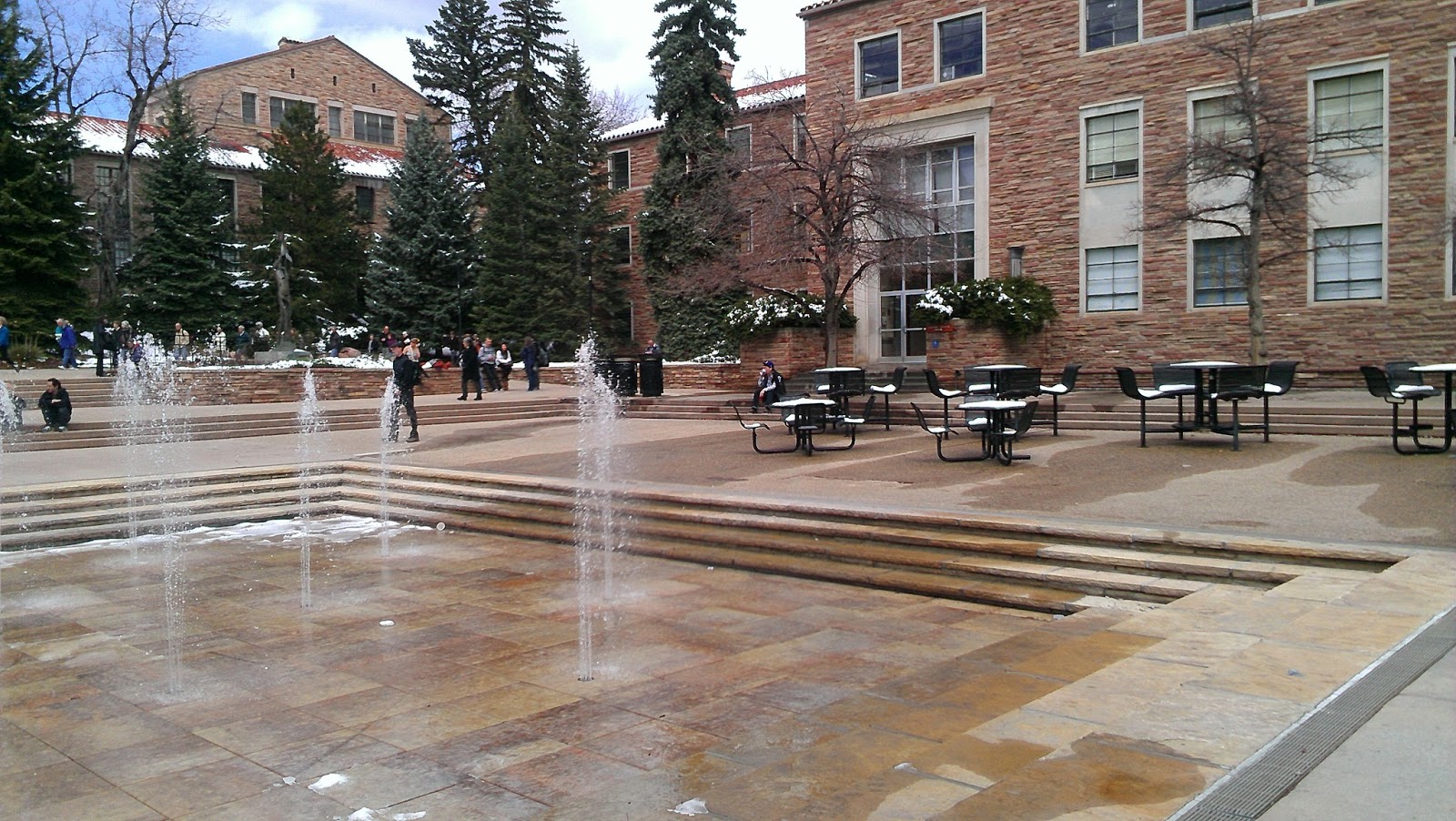
The mountains had lost most of their snow to the Colorado sun. The fountain was running again, and Wednesday’s buried tables and chairs would be used by students at lunchtime.


On Thursday, I went to ...

Obama's Foreign Policy: Audacity or Hope. He has no actual policy, because most attention has been devoted to domestic issues. His report card in this domain was decidedly varied.

 Nuclear Nightmares. It’s worse than we think, Obama knows it’s important, and we need to goad him to action.

 Security and Resilience in a Black Scan World. The “black swan” refers to the unpredictable events that we are not prepared to confront but that can change everything. So titled because we believe that swans are white … until a black swan appears. The possible black swans include things like the transition from fossil fuels to alternative energy sources, the increasing income gap, unseen implications of foreign policy choices (e.g., drone attacks), the possibility of nuclear micro-attacks (dirty bombs) or “rogue nations” with nuclear capability. And, especially, the precise speed and precise consequences of climate change.

And then, to escape from this environmental mayhem, I went to my “American West” class, which I had missed on Tuesday. We talked about water use and water scarcity. So much for that escape thing.

Friday

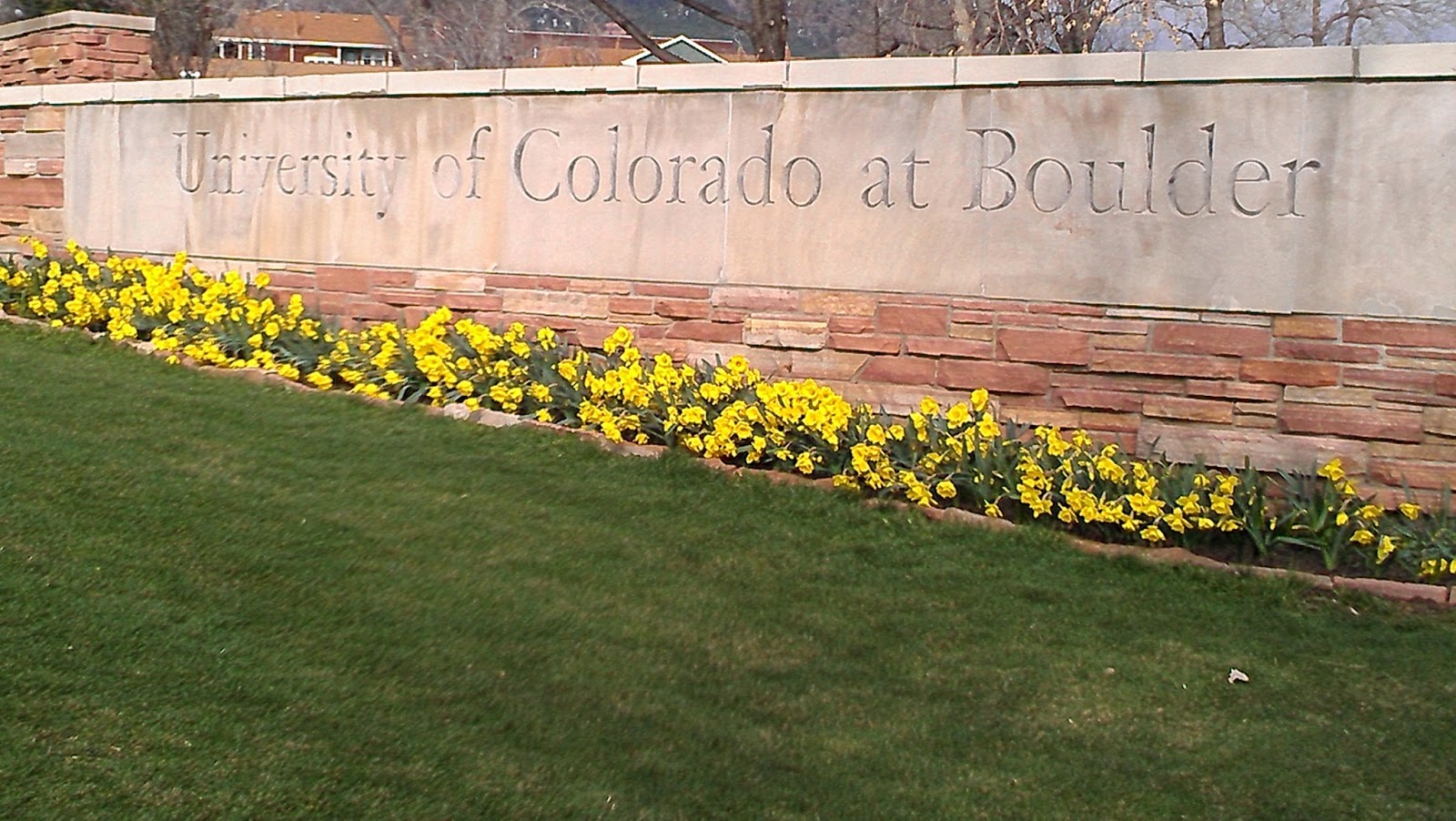
On Friday, I nearly didn't go to the conference. I was tired, and I felt a bit saturated with it all. But then I checked the schedule and decided to go to at least a couple of sessions. As I walked onto the campus, I was welcomed by the total turnaround that is the hallmark of Colorado's weather: the record snow was virtually gone, the grass was greened by the moisture, and daffodils greeted me at the entrance to the campus.


Beside the flag walk, the line of snow people had gathered in a cluster to bid the conference participants farewell. On the lawn, CU students played Frisbee and soaked up the springtime sunshine. 


I finished a great week with these sessions:

Supreme Court: Tyranny of the Third Branch. Bush v. Gore, Citizens United, and “activist judges," oh my!

 Droning On and On. Total agreement across panel members, including an army colonel, that the current use of drones is illegal, immoral, and maybe unconstitutional. They cited issues like national sovereignty, civilian deaths, and the dehumanization of both targets and drone operators. One panelist, who described himself as a supporter of Obama in general, said outright that Obama’s actions in this regard are impeachable. No one—on the panel or in the audience—took exception to his assertion.

 Molly Ivins Freedom Fightin' Memorial Plenary:  This talk is named after Molly Ivins, a brilliant, witty, irreverent, and incisive journalist from Texas, who, prior to her death, was a long-time, frequent participant in CWA. This year, the Molly Ivins plenary, “Truth in Journalism in the Digital Age,” was given by David Corn, the Washington Bureau Chief for Mother Jones. He's the guy who broke the 47% story that may have derailed Romney’s hopes for the presidency. Great set-up, mediocre talk about the impact of digital media on what we take as “the news.”


As I left the plenary, I snapped one more photo of the flag walkway. The weather had done a 180 since Wednesday, back to the sunny skies and green grass of Monday. Hard to believe we had over a foot of snow just two days before.


Heading off campus, I spotted a new sidewalk sign near where Monday's notice announced the impending arrival of CWA. Time keeps on moving. CWA is so over ... International Fest is coming!


I missed hearing about so many interesting topics. Heck, I only went to 19 out of 200 talks! But I can’t imagine sitting through many more sessions. My brain is on overload as it is.

Maybe I should lobby for shorter days, spread over two weeks. Think of the weather tales I could tell then!


Saturday, August 18, 2012

Dream on!

This week, students will return to school at Metro, the downtown Denver college (now university) where I happily spent my entire teaching career. For the first time, undocumented students, so-called “dreamers” who were brought to the US as children, will be able to attend college at Metro for a reduced rate. Their tuition will still be higher than that of documented students, but not as high as out-of-state residents.

This action isn’t directly related to President Obama’s recent order granting “deferred action” for undocumented young people, which will let these youth stay in the US to work or study without fear of deportation. Metro’s decision came some time before that announcement. But together, these two actions give these young folks a real opportunity to hope for a life that looked impossible so recently.

This makes me incredibly proud of this school where I spent so many years. I feel honored to be associated with an institution that’s willing to take the heat (and there will be plenty!) to let these dreamers dream.