Saturday, April 13, 2013

Wondrous weather and world affairs

I spent most of this week at CU’s 65th annual Conference on World Affairs (a.k.a., CWA), which I also wrote about last year. Over 200 talks and panels by over 100 experts from a variety of fields, with topics ranging from "Perpetual War" to "My Most Disturbing Thought," from "Hamlet" to "The Evolution and Devolution of TV," from "Break out the Cheetos! Pot's Legal" to "Confessions of a Bibliophile." With overlapping sessions, its often hard to decide where to go when, for instance, "Why Lincoln, Why Now?" conflicts with "My Life as a Spy and My Betrayal by the White House" (Valerie Plame Wilson). All free and open to the public.

To add to the excitement, we also had a snowstorm of record proportions. The week provided a classic example of spring storms in Colorado: a gorgeous, sunny spring day on Monday, 14" of snow by Wednesday morning, blue skies and green grass by Friday. Have I mentioned that I love Colorado weather?

[So, I just realized that this got pretty long. It’s just that there’s so much to say about the Conference on World Affairs and so many pictures to share of the weather!  If it seems like too much, you can just go for the pictures and consider those the visual Cliff Notes.]

Folks come to CWA from the Boulder area and beyond to hang out on campus for a week, just learning. There are scores of grey-haired folks toting their knapsacks loaded with jackets, lunch, and water. They ride the bus or park off campus and walk, carrying everything they’ll need for the day. They sit in clutches in the student center in the morning, poring over the day’s schedule, planning what sessions they’ll attend. They eat their lunch during sessions or in the hallways between—and so do the presenters. Students come, too, sometimes singly out of sheer interest in a topic and sometimes in groups as a class assignment. And there I was, in the midst of it all.

I couldn't seem to constrain my lifelong habit of taking notes during these talks. So, although I could go on and on about most any of the 20 or so sessions I attended, I won't. Instead, here’s my log for the week along with some highlights, to tempt you to join me next year—all wrapped in photos of the week’s wonderful, wacky, changeable Colorado weather.

Monday

Opening day of the conference. I arrived for the first talk, walking past this new pedestrian underpass with its strikingly appropriate underground artwork. I love it.


Then I spotted this sidewalk chalk notice alerting (warning?) the campus community that thousands of spare folks would be cluttering the sidewalks, the student center, and assorted venues around campus for the week.


En route to the opening plenary, I joined the crowd along a walkway lined with flags of the world—the iconic image of CWA, shown every year on the cover of the program. Sunny, warm. Students were running around in shorts.


Over the course on Monday, I went to the following sessions. I’ll give very quick crib notes on particular favorites, but if you want to know more about any of these, I have notes. Call me. How about lunch, if you're in the neighborhood? Or email and I'll send a copy of my scribblings. This offer holds for all days. 

Immigration: My Land or Our Land? Ours. It has to be ours.

Who Stole the American Dream?  The growing income gap (we have a “geyser up” rather than a trickle down” economy) has shrunk the middle class and virtually destroyed the “dream” that went with it. Who stole that dream? The “Powell memo” of the early 1970s, which set business on a path toward greater domination of the political process.

Why Universities Won't Teach Virtue. 

Bipartisanship, Civility, and Dialogue. We need to talk to each other.

“One Flew Over the Cuckoo’s Nest” (the movie): I saw this movie decades ago, and it was to be carefully dissected during the week, so I went to see it anew on Monday. Each day for the rest of the week, they show the same movie again, and any audience member can shout “stop” at any point to make a comment or ask a question. The idea is to run through the whole movie in this detailed way by the end of the week. This part, called “Interruptus,” would begin on Tuesday. This is a model created by Roger Ebert, the noted film critic, who died last week. He came to CWA every year for over 40 years, and he provided what has become the conference's tag line, describing CWA as “The conference on everything conceivable.

Tuesday, snowy Tuesday

The snow started Monday night, and things on campus were sloppy and dreary Tuesday. But loving weather, I actually enjoyed it. The community folks showed up despite the slimy weather, still with knapsacks, but now in winter wear. The flags were beautiful even as the snow kept falling.


My Tuesday sessions:

Belief. Wonderful discussion ranging from “Do I really believe what I appear to believe judging from my practices?” to “If you doubt all the things you believe about who you are, maybe you'll find who you are.

 Earth from Space: Altering Our Views. Maybe seeing earth from space (the “blue marble”) doesn’t just make us realize that we are all one family, that borders are totally imaginary (the idealistic view). More to the point, it shows us how dreadfully isolated we are, how responsible for this tiny speck in space, and how morally compromised we are as we continue to live as if we weren't responsible.

Junk Science Policy

Sino Spring: Social Media in China

“One Flew Over the Cuckoo’s Nest” (Interruptus). I was curious about this process—besides, it’s a shrink movie! So I skipped out on my “American West” class to check out interruptus. Maybe not a good choice for an impatient person with little movie savvy. I found the (very) frequent interruptions more than a little distracting. And as it turned out, most of the comments weren’t about story content but about technicalities (framing, lighting, etc.) and film-buff curiosities (others who were considered for this part, how the protagonist is paired with signs of nature, etc.). Great for real movie freaks. Not so fun for me. So I considered my interruptus experience complete after Tuesday.

Wednesday

It snowed through Tuesday night, and by Wednesday morning, we had a record snowfall for this date. The scene was magnificent. The flatirons were gorgeous, dusted like powdered sugar with snowIt was a bit sloppy and sometimes slick walking on campus, and some older folks came with their walking sticks for safety. But come they did—the sessions were packed all day. Sunshine, blue skies, and fresh snow made for a gorgeous morning.


I went to a few sessions before heading home at midday to do obligatory life-maintenance chores.

The Geopolitics of Energy

My Most Disturbing Thought. This remarkable discussion began with witticisms (realization that 80% of my pillow is skin and mites; fear of Muppets), moved to politics (faulty assumptions about geopolitics; inability of people to empathize with others they don’t know), and then dwelt at length on the fear of dying. A woman with recurrent cancer is disturbed by the thought “I’m not ready. It may all end, and soon.” And a man who worked on Robert Kennedy’s campaign and was there when Kennedy died reported that his most disturbing thought is that loss is inevitable and unpredictable. Time, he said, is all we have. Spend it well, be present in your life, because time will pass.

What the Frack! Bottom line: we have moved too far, too fast without knowing what we’re doing. The discussion that should have happened before fracking was allowed to begin is only now starting. The industry has already become entrenched and refuses to be forthcoming in providing the information that we need to assess the risks to water and air quality, and the risk of triggering earthquakes. Unfortunately, fracking is exempt from clean air and clean water laws, a concession to the oil and gas industry many years ago. Gee, I wonder how that happened ...


When I left around noon, the sidewalks were clear (OK, wet and sloppy, but not icy), the snow was settling, and spring was in the air. 


Thursday

By Thursday morning, the snow that had seemed a nuisance—if a beautiful one—on Wednesday had been shaped into a playful "receiving line" of snow people, welcoming CWA participants to the flag walk.


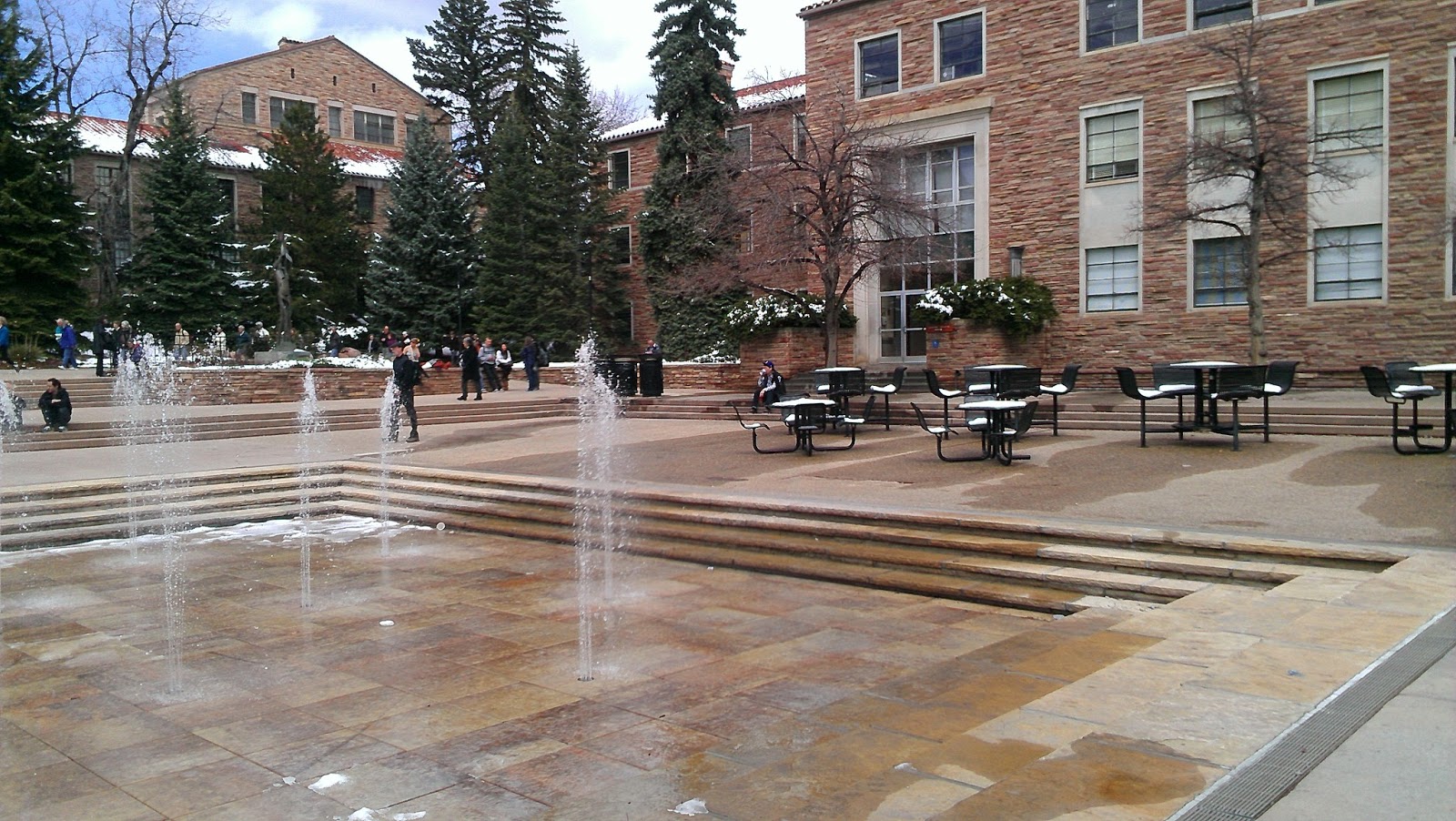
The mountains had lost most of their snow to the Colorado sun. The fountain was running again, and Wednesday’s buried tables and chairs would be used by students at lunchtime.


On Thursday, I went to ...

Obama's Foreign Policy: Audacity or Hope. He has no actual policy, because most attention has been devoted to domestic issues. His report card in this domain was decidedly varied.

 Nuclear Nightmares. It’s worse than we think, Obama knows it’s important, and we need to goad him to action.

 Security and Resilience in a Black Scan World. The “black swan” refers to the unpredictable events that we are not prepared to confront but that can change everything. So titled because we believe that swans are white … until a black swan appears. The possible black swans include things like the transition from fossil fuels to alternative energy sources, the increasing income gap, unseen implications of foreign policy choices (e.g., drone attacks), the possibility of nuclear micro-attacks (dirty bombs) or “rogue nations” with nuclear capability. And, especially, the precise speed and precise consequences of climate change.

And then, to escape from this environmental mayhem, I went to my “American West” class, which I had missed on Tuesday. We talked about water use and water scarcity. So much for that escape thing.

Friday

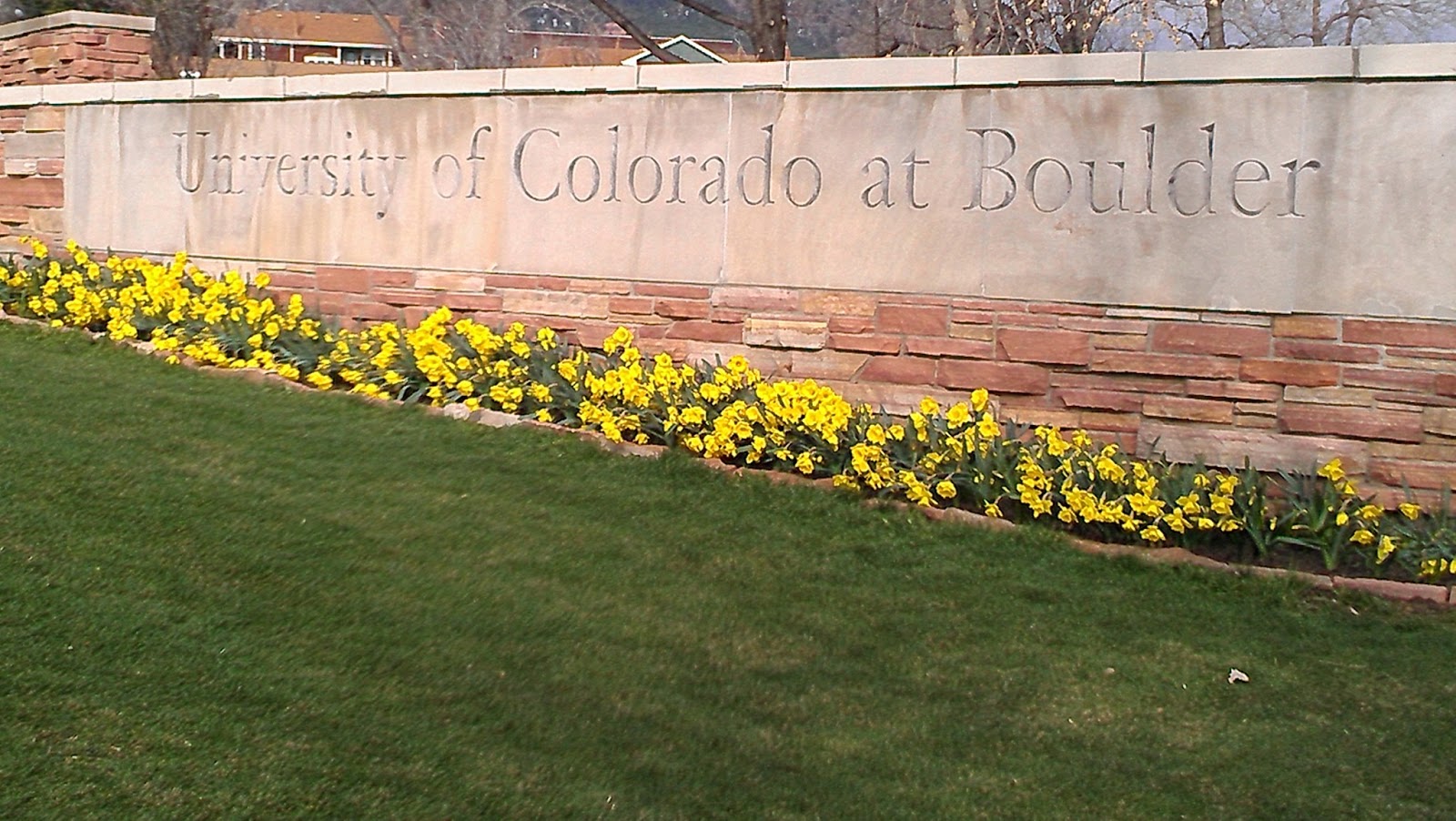
On Friday, I nearly didn't go to the conference. I was tired, and I felt a bit saturated with it all. But then I checked the schedule and decided to go to at least a couple of sessions. As I walked onto the campus, I was welcomed by the total turnaround that is the hallmark of Colorado's weather: the record snow was virtually gone, the grass was greened by the moisture, and daffodils greeted me at the entrance to the campus.


Beside the flag walk, the line of snow people had gathered in a cluster to bid the conference participants farewell. On the lawn, CU students played Frisbee and soaked up the springtime sunshine. 


I finished a great week with these sessions:

Supreme Court: Tyranny of the Third Branch. Bush v. Gore, Citizens United, and “activist judges," oh my!

 Droning On and On. Total agreement across panel members, including an army colonel, that the current use of drones is illegal, immoral, and maybe unconstitutional. They cited issues like national sovereignty, civilian deaths, and the dehumanization of both targets and drone operators. One panelist, who described himself as a supporter of Obama in general, said outright that Obama’s actions in this regard are impeachable. No one—on the panel or in the audience—took exception to his assertion.

 Molly Ivins Freedom Fightin' Memorial Plenary:  This talk is named after Molly Ivins, a brilliant, witty, irreverent, and incisive journalist from Texas, who, prior to her death, was a long-time, frequent participant in CWA. This year, the Molly Ivins plenary, Truth in Journalism in the Digital Age,” was given by David Corn, the Washington Bureau Chief for Mother Jones. He's the guy who broke the 47% story that may have derailed Romney’s hopes for the presidency. Great set-up, mediocre talk about the impact of digital media on what we take as “the news.”


As I left the plenary, I snapped one more photo of the flag walkway. The weather had done a 180 since Wednesday, back to the sunny skies and green grass of Monday. Hard to believe we had over a foot of snow just two days before.


Heading off campus, I spotted a new sidewalk sign near where Monday's notice announced the impending arrival of CWA. Time keeps on moving. CWA is so over ... International Fest is coming!


I missed hearing about so many interesting topics. Heck, I only went to 19 out of 200 talks! But I can’t imagine sitting through many more sessions. My brain is on overload as it is.

Maybe I should lobby for shorter days, spread over two weeks. Think of the weather tales I could tell then!


Sunday, April 7, 2013

Feminism in process … still


My blog muse has been on leave lately. Vanished. Gone missing. And this despite the large pile on my desk marked “blog ideas.” For some reason, I just haven’t felt like writing about anything. Hence, the long (for me) drought in what should be springtime stream of blog entries. In the last few days, though, an idea has begun to germinate, something I need to think more about. It all has to do with the state of feminism these days—in the world and in me. The ah ha moment, the final nudge for me to write about it, came when I made a totally sexist assumption this morning. Here’s the backstory:

First, I’ve been thinking lately a fair amount about the impact of feminism on the world. I thought about it recently when I cruised past Target’s toy department en route to the doormats and was struck by the frank stereotyping—the colors, the toy selections, the virtual absence of any non-gendered toys. And then I thought about it as I read Sonia Sotomayor’s autobiography (more on that another time), which talks at length about her dual battle with racism and sexism and the historical shifts she’s seen in both. And I thought about it again when I read about Obama’s recent “slip” in describing California’s attorney general in terms of her appearance. On the flip side, I thought about it as I read recently about the growth of women’s opportunities in sports—for the first time ever, every country in the Olympics had a women’s team. And I thought about it as I read about Sotomayor’s joining two other women on the Supreme Court—up to three from zero in the '70s. And I think about it every time I see another story about Hillary Rodham Clinton.

Then, a second tweak came at a party we went to last weekend. This comes against the background of the not-uncommon complaint from old-time feminists that “young women these days” don’t appreciate all we did for them, don’t realize how well off they are compared to the barriers earlier generations faced. True, perhaps, but you could argue that this is good news. Feminists worked so hard precisely so that women wouldn’t have to worry about the barriers we faced. So at this party last weekend, this topic came up. The “young women don’t appreciate…” line was raised, and someone—an old-time feminist herself—pointed out how wonderful this is. It got me thinking about this other aspect of feminism—the who claims it, who benefits, who pays aspect.

A third piece came from a recent conversation with my partner. She’s been invited to speak on a panel on “Feminism Today,” and we were talking about that. As I’ve reflected more on that panel topic, I’ve started wondering, why now? What’s leading a major professional organization—not a women’s organization—to highlight “feminism today,” today? What does “feminism” mean to folks these days? What does “sexism” mean these days? How does the challenge to sexism mesh with, say, the push for same-sex marriage (remember the feminist critiques of marriage as an inherently sexist institution)? And how does it mesh with dismantling the gender binary—academic lingo for questioning what “male” and “female,” masculine” and “feminine” really mean anyway? How does it mesh with our barely emerging attention to transgender and intersex issues?

Then, the fourth piece: I’m giving myself the gift of a week off work to attend the Conference on World Affairs, where one of the sessions I plan to attend is called “The Women’s Movement Stalled.” What does that mean? Stalled how? And when? And in who’s mind? Who are these panelists and what will they say? Will they clarify or muddy these questions? Will they be old ‘70s feminists, “young women today” who don’t appreciate, both, neither? How do they know what happened (or what’s happening) to the women’s movement? And why don’t I?

And then, for the final piece, the real corker: not to be outdone by our President, I made a monumental slip myself this morning. A sexist assumption of monstrous proportions, enough to have me voted instantly off the feminist island. It was so regressive, so egregious that it would even get me voted off the ‘70s feminist island … never mind the contemporary island where folks are attuned to implicit attitudes, modern sexism, and subtle bias. Oh, no. This was flat-out blatant. Here’s what happened:

I am considering (actually, I’m pretty much planning on) going to a weeklong Smithsonian-sponsored old-fashioned-style Chautauqua “athenaeum” this summer. A week studying astronomy—I have to assume this is the layperson’s version of astronomy, or I’ll die—with an astrophysicist who is an astronomer at NASA’s Goddard Space Flight Center. How does this sound: Immersed in the inquisitive nature of Chautauqua, you’ll learn how scientists are discovering new planets and considering the feasibility of other planets with life. Explore the Milky Way galaxy and discover how mysterious clouds of dust and gas are giving birth to thousands of stars.” I was so excited, I sent the link to my partner and said something bland like, “I really, really want to go to this!” She came into my study to learn more, and I started telling her about it—including about its being taught by this star astrophysicist. “He’s at Goddard,” I enthused, skimming the description in the text. “Wait,” she said, “Michelle Thaller ... Don’t you think that could be a woman?” Nailed.

I sort of love these moments because they remind me how much there still is to learn—always. They’re humbling, in a good way, because they remind me to be less critical of other folks’ slips. And they remind me how super well we all learned these lessons. Forty years of feminist consciousness-raising and countless lectures and talks on the evils of sexism haven’t erased it from this old head.

This little incident is a great example of the implicit attitudes I’ve mentioned before—but in those earlier posts, I was grousing about people’s implicit attitudes toward me as an old women. This time the shoe is on the other foot: I’m the one revealing my implicit assumptions. Surely, my well-learned stereotypes told me, a great Smithsonian-selected, Chautauqua-sponsored, NASA-employed astrophysicist is a man. The worst part is that it wasn’t even a question I asked … because I knew. I knew so deeply that I read right past her name. “Michelle,” I mumbled to my partner, “could be a man’s name.” Right.

So, I ask myself, is feminism dead? Well, I hope not, because the work sure isn’t done yet. And I don’t just mean the “Lean In” work to help women get a larger share of the power pie. I don’t even mean work against the lingering biases that continue to limit girls and women and hem in boys and men—although I know those need work, too. I mean the homework, the inside work. My own work.

And aren’t I lucky: this morning, I got a private tutorial in sexism 101. Next week, wisdom from the Conference on World Affairs. In June, the Goddard astrophysicist. And who knows what lies beyond. My lessons stretch out before me.


Tuesday, March 26, 2013

It's odd ...


… this experience of aging. Its impact—emotional, physical, mental, social, all of it—continues to catch me off balance. It’s not that it’s unexpected, exactly. It’s just that it’s so often … well, unexpected! I’ve always known, of course, that I’d get old. But somehow, I never knew what that experience would be like. Especially, I never knew how many daily, momentary events would make my age suddenly, unexpectedly salient. Like these …

Last Friday, my sister sent me a mass email, a reflection on the writer’s awareness that she is in the “winter” of her life, with age slipping in and the memories stretching out behind. Saturday, I went to a feel-good movie about a retirement home for musicians, a now-formulaic story about resenting old age and then embracing it in a swirl of happy rebirth. Sunday, I went to a memorial service for a man who was younger than I am and listened as friends and family described a gentle soul who was the crux that joined a vast variety of lives. Yesterday, I got an email announcing that Resonance Women’s Chorus of Boulder will celebrate its 10th anniversary in April, bringing “celebratory attention to the dynamic process of a community growing and aging together.” Also yesterday, I came across a medical study showing that our genes largely determine whether exercise will or will not reduce the loss of muscle that comes with aging, so “working out” only works out for folks with the right genes (which might, of course, be any of us!). Last night, I spotted an online video about an arch in Southern Utah, and just seeing it brought back decades worth of memories of times spent in the red rock country there.

Today, I read news chock full of commentaries on the Supreme Court’s hearing arguments in California’s Proposition 8 case, one of two cases they’ll hear about same sex marriage. This is simply astonishing: in my lifetime—between young and old—we’ve gone from sick, sinful, illegal to contemplating same-sex marriage. And today, I made travel plans for a trip to NH for an anniversary celebration of a program where my partner taught—a trip that also means a chance to see old friends and visit old haunts.

I just finished a book for my American West class, Fire on the Mountain, which is about the 1994 wildfire just west of Glenwood Springs, CO. As I turned the final pages, I said to my partner, “I need to hike the trail to this fire site.” When she asked why, I had no answer. It just feels like something I need to do. Having read about it, I want to be on that hill, literally put myself in the place where those young people—fit, happy lovers of the outdoors, lovers of challenge, youngsters like I used to be—faced the fire that would end it all for them. As it will end for all of us. It feels disrespectful not to go. If, that is, I can do it. A hike that once would have required only the will and the time might not be possible for me now, despite having both.

All of these have been moments when my age became salient. I suspect that if I were still young, many of these events would pass and then get quickly lost in the stream of a busy life. But now, they carry heightened meaning because now, they are explicitly about aging, my aging. I don’t consider this “dwelling” on aging. It’s more a state of openness than one of preoccupation. The truth is, age is slipping in, and memories are trailing out behind.

So far, I have not figured out what I’m supposed to gather from this jumble of experiences. For the moment, I’m just hanging out in the unexpected complexity of it all, acting as if it all made sense.

I’m pretty sure it doesn’t.


Thursday, March 21, 2013

Vernal equinox - the first day of spring!


Wednesday, my official day to remind myself I’m retired, happened to be the vernal equinox, the day when daylight catches up with dark and we officially move toward summer. So, in honor of the synchrony of those two events, I decided to chronicle the day, see what the first day of spring looked like in 2013. I actually didn’t go anyplace fancy, but I kept my camera handy as I went. Here’s what I saw:

Frost crystals as I stepped out the door …


… right above daffodils, with their bright green promise of springtime flowers.


Perfect. Thus began the first day of spring—with reminders of winter not yet past, side-by-side with hints of imminent spring.


I headed for the Mesa Trailhead, always a favorite outing. (I’ve posted pictures of wildflowers taken on walks here before.) The drive to my destination took me past views of the high peaks, still covered in snow—although far less than we’d wish. It looks like another dry summer ahead, with forest fires already started in the hills.


I was reminded of the fire threat as I arrived at the trailhead


And then, just beyond this sign were icy reminders that it this is just the very edge of spring, and winter hasn’t really left (snow forecast for the weekend—and that’s a good thing!).


The walk along one of several trails here revealed lingering signs of winter mixed with harbingers of spring, like spots of snow on the nearby hills behind a (very slightly) greening meadow ...


... and a gorgeous sky that could have been any time of year.


The residue of last summer’s flowers and tracks in what must have been a muddy trail during the winter recalled the months just past …


… and lucky glimpses of gifts that only winter reveals, things unseen in the summer—a bird’s nest tucked in the branches of a small tree, and a red sandstone rock covered with soft sage-colored lichen and draped by a scrub oak, both of which would be invisible behind summer growth.


As I headed up the hill, watching for hints of green to prove this was the first day of spring, I noticed instead the incredible dryness. This part of Colorado is always sort of dun colored this time of year, but these plants are bone dry, brittle from the lack of moisture. Looking back downhill, the valley below me told the same story ... in a different shade—the difference between early morning sun and mid-day light with the clouds moving in.


But back near the trailhead, the ice had thawed from the stream, which looks really low, but at least it's water!


I headed back to town to resume my (quasi-retired) life. I went to my favorite local coffee shop ...


... where I got a large cup of micro-roast coffee and a jar of water, and set up shop for an afternoon's work editing documents.  


Since I enjoy my work and love this coffee shop, with all it's openness and light, it seemed a fine way to wrap up a spring day.

I may have mentioned before that I love Colorado, and one of the things I love most is the change of seasons. Soon, the wildflowers will be out, and the trees and bushes that look so dead now will be full of birds. In fact, I heard towhees as I walked, and I spotted jays, robins, and a few juncos. On behalf of all of them, visible and seen, silent and starting their spring songs, this little guy showed up on a high branch of a bare old cottonwood near the trail, singing his tiny heart out. (This is not a puzzle. Look carefully ... he's really there!) 


He sends spring greetings to you all.


Monday, March 18, 2013

TRANSformation


When I decided to retire, it was never one of my fantasies that I would hang out on the golf course or sit on the couch eating bonbons and watching soap operas (although the bonbon part has a certain appeal). I know that some folks long for a retirement steeped in leisure, but my own particular penchant is for keeping busy—in fact, not keeping busy is actually dangerous for my mental health. And I guess it’s no surprise that as someone who spent 60 years going back to school every fall, my idea of “busy” includes a whole lot of learning new stuff. Sometimes, this means taking classes—a pastime I have recently raved about here. Other times, though, it just means keeping my eyes and ears open for chances to learn something. Being in a college town helps, of course, as does having partner who is equally eager to keep learning.  

This last weekend, I had just such an opportunity. On Friday and Saturday, CU’s GLBTQ Resource Center hosted the 7th annual “TRANSforming Gender Symposium,” a two-day focus on (perhaps obviously) transgender identity and experience. Notice, that’s 7th annual! Given that trans issues are just now filtering into public (as opposed to activist or academic) consciousness, the fact that this is number 7 is really impressive. Each year, this remarkable event brings in nationally known experts on trans issues, adds a bunch of films and workshops led by local folks, and then invites the whole university and the surrounding community to come learn. The conference is designed to serve both the trans community and folks with other interests in the topic—personal, academic, professional, or simply human interests.

As with other conferences that I’ve written about, I struggle with how to discuss this experience: a “book report,” a story line,  an attempt at synthesis, a “highlights” reel? This time, I think I’ll just tell you about the very best parts of the conference (IMHO), thinking you might add these things to your list and leap at any opportunity to experience them yourself. 
1 
1.    The opening keynote: Eli Clair is a genderqueer writer and activist who has cerebral palsy, which expands his activism in complex and enlightening ways. Eli’s talk was about shame. Specifically, it was about body shame; more specifically, about body shame experienced by trans people and people with disabilities. His presentation was so powerful—lyrical and moving, and at the same time full of information and challenging analyses. I heard one participant refer to it as “academic poetry.”

Eli’s talk wove together personal experiences, links among queerness, disability, class, gender, and race, a poem about eating watermelon, and a recurrent admonition to resist shame. Deep and moving barely describe it. And then came the “Q and A,” which he prefers to call a “community discussion,” insisting he has no answers. But he sure had some thoughtful insights. For example, on the notion of trans identity as biologically based, Eli first acknowledged the importance to some trans folks of a medical diagnosis—it’s the only way to get insurance coverage for transition-related medical procedures and hormones. But on a more fundamental level, he wondered aloud what we tell ourselves when we excuse our identities by an appeal to a lack of choice, a “born that way” argument. Why, he asked, would anyone think that making an ethical choice is less valid than somehow becoming who we already are?

As for marriage and the all-out push for marriage equality, he says, as others have, first, it’s the battle we have. Whether or not it’s the one we might have chosen, it’s the one we have. But as it moves forward, we need to pay attention to who’s left behind. Sure, it will be nice for people to pass their pensions on to their partners. But what about those of us, he asked, who don’t have pensions and never will? 

While it’s true that I agree with the points Eli made—although he made them far more persuasively and poetically than I can—there was so much more to his presentation than his personal positions on thorny issues. His comments about shame, his poetry, his personal recollections were, simply, beautiful. I’m finding it hard to convey the impact of Eli’s presentation, so I’ll just encourage you to watch for a chance to hear him. You’ll be glad you did.

2.    The movie “Intersexion”: This is one of the very best documentary movies I have seen in a very long time. If you click on the link above (“Intersexion”), you can see a trailer that’ll give you a hint. I went to see this film because although I knew some stuff about intersex identity, I really didn’t know much. The “I” is only occasionally included in our alphabet soup (LGBTQI). When it is, the discussion almost always turns immediately awkward because (a) few folks know anything at all about intersex issues—at best, only that it describes folks who don’t fit the “gender binary”; and (b) people are uncomfortable with the  topic—not least because it involves discussions of genitalia and it so totally disrupts what seems like the most obvious of divisions: the biological division of people into female and male.

The movie is based on interviews with a number of intersex folks who have had a range of experiences—from multiple involuntary (and typically futile) surgeries to validating, supportive parents, and everything in between. Some still struggle mightily as adults; some are comfortably at home with their lives. The film also includes some interesting historical, medical, and other assorted factual information—some of which was new to me and some of which I knew about only through psychology’s sort of feeble attempts to address the issue.

Here are some of the things I learned: Intersex is not nearly as rare as we might think. About 1 in every 2000 kids is born with some constellation of characteristics that identify them as intersex. Yet we rarely (if ever) hear about it, so carefully have we hidden it from view, so invisibilized have all these folks been. As one person in the video says, “Intersex isn’t uncommon; it’s just unheard of.” Intersex isn’t just one entity; it includes a wide range of variations on the usual she/he, male/female dichotomy:  variations in genitalia (differences in the presence/absence and/or size of the penis, vagina, labia, testicles); differences in chromosomal make-up (combinations other than XX or XY,  like XXY, X0, XYY, etc.); differences in internal organs and their correspondence to external ones (penis with uterus, vagina with male gonads, all or none of the above, etc.); and lots of others.

The sample of folks interviewed here are likely more at ease with their identity than are many other intersex people—otherwise, they wouldn’t be willing to be on film. They surely represent a tiny slice of the whole population of intersex people. Watching the movie, I wondered to myself which of the many thousands of people I’ve known in my life might identify, if only privately, as intersex. How thoroughly we have stigmatized this human experience—this human variation that challenges our most simple and concrete certainties about the nature of reality—and at the expense of how many people. 


So, those are my personal favorites from a symposium with many other programs to choose from. I’ll be watching for it to come around again next year: the 8th annual TRANSforming Gender Symposium. Maybe you will too. They welcome out-of-state folks.

So much to learn, so little time.


Thursday, March 14, 2013

Civilized!


On Tuesday, the Colorado General Assembly voted to legalize civil unions for same-sex couples in Colorado. To understate the point, this is huge! It’s something activists in the state have worked long and hard to achieve. In this state, it’s made even more marvelous by the fact that just 20 years ago, some folks were calling Colorado the “hate state” for its passage of Amendment 2.

Back then, Colorado was notorious as the (to all media appearances) least LGBTQ-friendly place in the nation. In truth, that judgment was overblown—media frenzies do that. And in truth, Amendment 2 ended up having some very positive long-term consequences—including, arguably, Tuesday’s success. But no one could have predicted that just two decades later, same-sex couples would have that same state’s approval to form legal unions. It’s not yet the whole shebang, and folks were pointing out that it wasn’t marriage before the applause even died down. But it’s a step—a giant step—in this long trek.

Besides, for Coloradans this really is as good as it gets … at least for now. Civil unions are the greatest possible victory in a state that has an explicit constitutional ban on same-sex marriage. We’re not the only state in this particular fix. It’s one of several patterns in the crazy-quilt national patchwork of state-by-state laws that include legal support for, indifference to, and prohibition against same-sex unions of various sorts. The result can be a legal and logistic nightmare for same-sex couples, who may be married in one state, have no legal protection in the next, and see their relationship explicitly negated in a third.

Who can possibly keep up with it all? Well, conveniently, Sean Sullivan, a blogger for the Washington Post, has done us the great favor of summarizing the current status (well, current until Tuesday) of various laws and constitutional amendments related to same-sex marriage (ssm) around the country. To see where your state stacks up (and to be astonished at the piecemeal quality of marriage rights at this juncture), check out his blog here. These maps are really eye opening. Some of them are also clickable, if you want even more detail about your state—or someone else’s, for that matter.

All of this becomes really relevant given the pending Supreme Court consideration of two marriage equality cases, which I wrote about recently. It turns out that the potential impact of these two cases is greatly complicated by this legal hodgepodge. Right now, nine states and DC have marriage equality. The rest have an assortment of conditions ranging from constitutional and legal prohibitions on ssm through various partnership and civil union statutes (and various combinations of the above) to total silence on the issue. The two cases that will soon be considered by the Supreme Court may solve none, some, or all of these discrepancies among states.

One case challenges California’s Proposition 8, which rescinded marriage rights briefly accorded in that state. That ruling could affect only California or, in the broadest case, it could affect all states with legal bans on ssm (like Colorado). The other case challenges the federal Defense of Marriage Act (DOMA; in all federal matters, marriage is between one man and one woman). It argues that it’s unconstitutional for the federal government to refuse federal marriage rights (social security, tax benefits, etc.) to married same-sex partners living in states where marriage is legal. This ruling could have a narrow impact (in just those nine states and DC). Alternatively, a broad ruling could ripple far beyond those jurisdictions, opening the way to broader enactment of marriage equality laws.

To add to the uncertainty, legal technicalities could influence both these rulings and their long-term impact. Basically, the court could decide these cases in a million different ways (approximately). If you’re curious about these things, here’s a pretty comprehensive discussion of the ins and outs of the matter.

Most folks who track these things carefully (which does not include me, except remotely) expect that the court’s rulings will not be so broad as to affect marriage rights in all the individual states. With the current court’s conservative leanings, we might even hope that the rulings will be narrow, since having a negative outcome from the Supremes at this point could stall the movement for a long time. In fact, some people argue that, given the recent rather steady—and occasionally dramatic—progress toward acceptance of marriage equality, we might be better off with the slow, steady slog of legislative and ballot box change. Whatever, hope springs eternal.

Stay tuned. The court will be hearing oral arguments on these cases on March 26 and 27, and they’ll probably issue rulings by June.


Tuesday, March 12, 2013

Foremothers and nowmothers


I’m just back from the annual conference of the Association for Women in Psychology, a perfectly fitting place to have spent International Women’s Day, March 8. The conference was a lesson for me, a lesson in movements and their shifts, a lesson in patience and persistence. A lesson I can always use, since I’m prone to impatience and its attendant crankiness.

AWP conference logo
Reminiscent of Sojourner Truth and Helen Reddy

The Association for Women in Psychology, AWP, was created in the early 1970s as a response to mainstream psychology’s persistent disregard for women—as subjects in their research, as clients in psychotherapy, and as professional members of the discipline. This sort of feminist rebellion was happening all over the place in those days—in medicine and law, history and business, union halls and grass roots organizations, art museums and gyms. Everyplace you looked, women were protesting their exclusion from mainstream society and all its tributaries. AWP was psychology’s most radical version of the rebellion.

Over the years, as psychology has become more responsive to women’s voices and women’s issues—arguably precisely because of AWP—the organization has sometimes languished. In fact, it has sometimes looked like it might die of neglect, as foremothers moved on and younger women went elsewhere. But even in those periods, AWP remained a bulwark, a safe harbor where you could go to present your latest sort of edgy work, hang out with friends and colleagues, and always be safe in the assumption that you were among feminists (including a lot of lesbian feminists). Occasionally that assumption gets tweaked by an odd comment—which can be a bit jolting—but usually, progressive positions (feminist and otherwise) are taken as given. Besides, the atmosphere is wonderfully open and supportive, and the conference is small, which together make it a perfect place for students to enter the professional fray.

These days, AWP seems to be enjoying a resurgence. The offspring of those early foremothers are now themselves mentors, “nowmothers,” of a new generation of feminist psychologists. And recently, those younger folks—graduate students and early career psychologists—have been showing up in droves with exciting new work. So, a weekend at AWP is almost always a treat, and it was this time.

Thinking about AWP’s ups and downs provided the first part of my “lesson” for the weekend. One of the women I virtually always see at this conference is a founding “foremother” who has done consistently amazing work in the field. I’ve never worked directly with her (the closest I’ve come is being on panels with her), but I consider her an intellectual mentor nonetheless. I’ve sometimes wondered why she bothered to stay so involved with AWP during its less stellar years. I have to admit that there were periods when I didn’t go to the conference because the offerings seemed so feeble. Yet, now I'm enjoying this newly enlivened AWP as it thrives on, despite my skepticism. I actually know this about movements—they move in fits and starts, and sustaining them requires not giving into the fits, as impatient folks like me can easily do. Seeing this woman yet again, I realized that I owe the life of this organization to the patient persistence of people like her who didn’t bail, who had faith.

Another version of the same message was delivered by the conference theme and the program supporting it. This organization has tried long and hard to become truly inclusive, and the program this year was a striking example of that effort. The theme was “Voices of Indigenous, Immigrant, and International Women,” and the two keynote speakers were a Thai feminist, Buddhist activist, founder of the International Women’s Partnership for Peace and Justice, and a Navajo historian from the University of New Mexico, whose work is on indigenous feminisms and colonization. The alternative perspectives these women brought—“alternative,” that is, for many of us, but completely central for them—were a reminder of why this sort of inclusiveness is so important. Both of them challenged ideas I usually take for granted—ideas I only realize are culture bound when I hear someone speak from a totally different vantage point. Otherwise, I’m the fish who doesn’t know she’s wet.

Here’s that lesson in persistence again: It has taken years, decades even, for AWP to make this crucial shift. They started from a very privileged position that passively welcomed non-mainstream people and their work to the conference. This despite the fact that the conference was totally shaped by (and for) a white, middle-class, educated, U.S. perspective. Over the years, they have aimed for—and increasingly achieved—a position that actively seeks out different experiences, other perspectives. One that insists on “cleaning house” in all the ways required to make those additional perspectives integral to (instead of attached around the edges of) the conference. The two keynote talks were lessons in this sort of expansiveness. And these women’s presence with us was testimony to the dogged persistence of the organization in trying to walk its talk.

But I don't want my focus on my “lesson” to misrepresent my time at the conference. It was also rich with really interesting small sessions, like a discussion of the evolving meanings of sex, gender, and desirecomplicated notions if ever there were any. (If you’re looking for a hit of confusion, ask me for some readings on this topic.) Then there was a movie about Daisy Bates, the largely unheralded African American woman who was the force behind the “Little Rock 9”—the students who integrated Central High School in Little Rock, Arkansas, during the mid-1950s, the most heated part of the Civil Rights movement. Another session amounted to a guided tour of issues related to race, sexual orientation, and religion. And then there was a video and discussion about micro-aggressions (a concept I mentioned in an earlier post), whose title wins my award for the best concise summary of a topic: “Did you just say what I think you said?”

Besides all that, I got to hang out with some friends whom I don’t often see. One of these women is doing amazing international research, studying LGBTQ activists in other countries. Soon, she’s off to Kyrghyzstan, where she has an ongoing program of work. She speaks Russian, which is helpful to her, humbling to the rest of us. Another was a Salt Lake City social worker whom we got to know during some long-ago research about LGBTQ youth in Salt Lake. Through her, we caught up a bit on the high school “kids” we studied … who are now in their 30s. (How did that happen?).

Finally, to top off the weekend … AWP takes the legacy of its elders/foremothers and its mentor/nowmothers seriously. The annual program always includes a celebration of “crones” (wise old women), and the organization gives an annual award for mentoring. This year, my partner received the mentoring award for her wildly diverse mentoring activities. Over the years, she has served as a mentor (sometimes officially, but more often not) to pre-college students, first-generation (and other) undergraduate students, graduate students, doctoral candidates, post-doctoral students, early-career professionals, and well-established colleagues. She always says she “didn’t do anything,” but plenty of folks thought otherwise and submitted a very impressive group nomination. To celebrate, I bought her a gorgeous purple hoodie with the conference logo. Call me a big spender.

So what, I ask myself, did I bring away from this weekend? (She got a sweatshirt and all I got was a lesson?) I brought these things: A reminder that movements move, but slowly and not always steadily. A reminder that it takes individuals who are willing to stay the course when the going gets tough—or worse, boring. The inspiration of women doing remarkable work around the world, women who share important values with American feminists and who also have a lot to teach us. A mix of regret that my particular life course was ahead of (rather than in the midst of) all the things that are happening these days and satisfaction that those things build on older stuff, some of which I did. Gratitude for the foremothers and nowmothers who created and create the space for all this to happen.

Especially, a deep sense of the continuity of it all. The conveyor belt of people moving the movement.


Sunday, March 3, 2013

Now this is a birthday party!


Stained-glass ceiling, Hotel Boulderado 

I’m getting older this week. Well, OK, I get older every week … every day. But my birthday is this week, which means another year has flown, drifted past while I was barely looking. Time is such an odd thing, how it moves faster the more of it you have experienced. So here I am, about a year older, and my partner and I spent a chunk of the weekend marking the historic event.

The celebration began with a shopping trip, which some folks might think is automatically wonderful. But it’s not usually my favorite sort of outing. In fact, I mostly hate shopping. But this was fun because I actually wanted something particular, and it had nothing to do with styles and fit and trying on. We went to hunt for a new backpack to replace my old one, which is (literally) coming apart at the seams. It’s one of my favorite possessions because it carries my computer (and a lot of other stuff) when I travel—and, increasingly, when I go do my editing at neighborhood coffee shops instead of at home. My cabin fever has been especially serious this winter, and the sunlight and company of coffee shops have proven palliative. So my partner got me this very cool backpack,  which is so special that it even came with a registration policy that promises to find it for me should I ever lose it, and a guarantee against every imaginable danger—even airlines!


Then, backpack in trunk, I was treated to breakfast/lunch at my very favorite restaurant, the original Walnut CafĂ© (it was lunchtime, but we both ate breakfast. We usually follow our meals with the ‘Nut’s famous pie, but we passed this time in preparation for what lay ahead). After brunch, we indulged in the ultimate leisure afternoon activity—a couple of hours’ reading at a (you guessed it) coffee shop. My current reading for my American West class is a novel, so I didn’t even have to underline or take notes. Perfectly lovely.


Then, we headed for the Hotel Boulderado. Anyone who lives in or near Boulder likely knows of the Boulderado, the clunkily, perfectly named historic luxury hotel in downtown Boulder. The hotel, which opened in 1909, was built as a showcase of the them-tiny city’s aspirations to greatness. A lot of the original features are still there—including the tiled entryway and the cantilevered cherry staircase, which mercifully includes plenty of landings en route from floor to floor (see “elevator” below). Overhead in the lobby is a beautiful stained glass ceiling—not the original, but that’s a story in itself. However, the (tiny) elevator is the original—complete with a folding gate and requiring a human operator. The last elevator like that I remember was in some department store in downtown Denver during my childhood. (Does that date me?) We’ve never stayed at the Boulderado before and may never again—but it seemed perfect for a b-day adventure!

We took the elevator to our fourth-floor, antique-filled, flatirons-view, corner suite—where I’m certain Joan Baez, Lily Tomlin, Dar Williams, and Helen Keller all slept (I know they stayed there, and what other room would they choose?). Then we strolled down the Pearl Street Mall to dinner at Jax, an up-scale seafood restaurant. Another luxury we’ve never enjoyed before and may never again. After pigging out on seafood and observing the nightlife at Jax, we walked back to the hotel, pausing for an ice cream cone on the mall (thank you, weather goddess!). To finish off the celebration, we had breakfast at Q’s, the hotel restaurant, which we both love, complete with French press coffee. Perfect decadence.

And here’s a really fun part of this story. The stay at the Boulderado and dinner at Jax both happened because we had these great coupons. Now, I’m sure you’re wondering how we got them … so here’s the answer. The coupons were part of a package we bought at the auction at last year’s Open Door Fund dinner (the 2013 version of which is just weeks away). For those of you who don’t know about the Open Door Fund (ODF), it’s a permanent endowment of the Community Foundation that specifically gives small grants to groups and agencies that serve the LGBTQ community. The ODF fund-raising dinner each spring includes a speaker (this year, it’s be Dustin Lance Black, screenwriter for the movie “Milk”), followed by the real entertainment, the live auction. A genuine professional auctioneer, who is a riot to watch, nudges and cajoles and persuades folks to higher bids on both wonderful and improbable items. Last year, folks won trips to glamorous destinations (Italy, Santa Fe), a hiking trip with Aaron Ralston (of “127 Hours” fame), dinner and theater packages, artwork, food baskets, and on and on. We bid on and won a package that included discounts on dinner at a couple of really nice Boulder restaurants (including Jax), an assortment of movie and theater tickets,  and a night at the Boulderado. Hence, our improbably luxurious birthday weekend. I’ve rarely felt so up-town, even though we were wearing the requisite Boulder garb for a night on the town: dress jeans.

We likely would have done some of the things in our ODF package anyway. Some—like the Boulderado and Jax—not so likely. This was hard to beat—an over-the-top birthday party that supported the local queer community to boot.

Plus a swell new backpack. Heck, it was as fun as those cake and ice cream parties of my increasingly distant childhood!